Mill Wakaba, the Gravity of Fame, and Fighting against the Abyss
NOTE: STOP. I will be discussing the events from Chapter 148 to the end of the Umamusume: Cinderella Gray manga. If you have not read it and wish to read it unspoiled, I would suggest turning back now.
Umamusume: Cinderella Gray had its final chapter on December 25, 2025 - 2 days and 35 years later than the legendary 1990 Arima Kinen victory that marked the final notch in the legacy of the real Oguri Cap. It's a story that I followed ever since I got into Umamusume in Fall of 2023, and one that has shaped a lot of who I am today as a person. From the striking images that leveraged the medium's limited palette to their fullest to the interweaving of so many heartfelt arcs along the storyline of Oguri Cap's career, it is one of the cultural touchstones that any fan of Umamusume would be remiss to skip over.
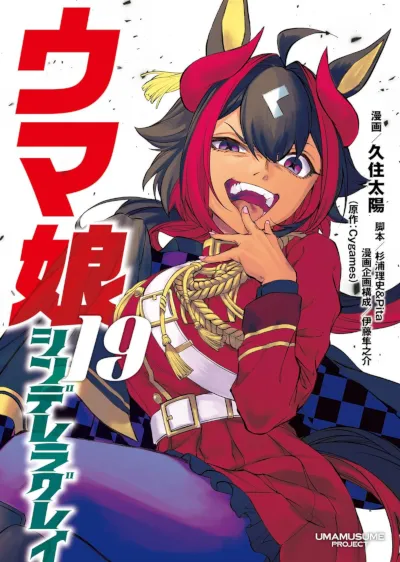
Cinderella Gray is full of rivals chasing after Oguri - one could even point to that as the main point of contrast with another Umamusume manga that I've become a fan of: Star Blossom, where the main protagonist - Sakura Laurel - is the one chasing after the star of her era - Narita Brian. From Tamamo Cross to Yaeno Muteki, Super Creek to Inari One, the ensemble of rivals has no shortage of legendary names that accompanied Oguri's legendary career and the story does them justice. Yaeno Muteki's 1990 Autumn Tenno Sho and Folkqueen's (stand-in Horlicks) 1989 Japan Cup enamored me to them and made them some of my favorite characters. However, one horse unexpectedly managed to get ahead of the pack - ironic, I suppose, given her circumstances - as my favorite character: Mill Wakaba, the uma whose biggest win broke her heart.
 |
Who is Mill Wakaba?
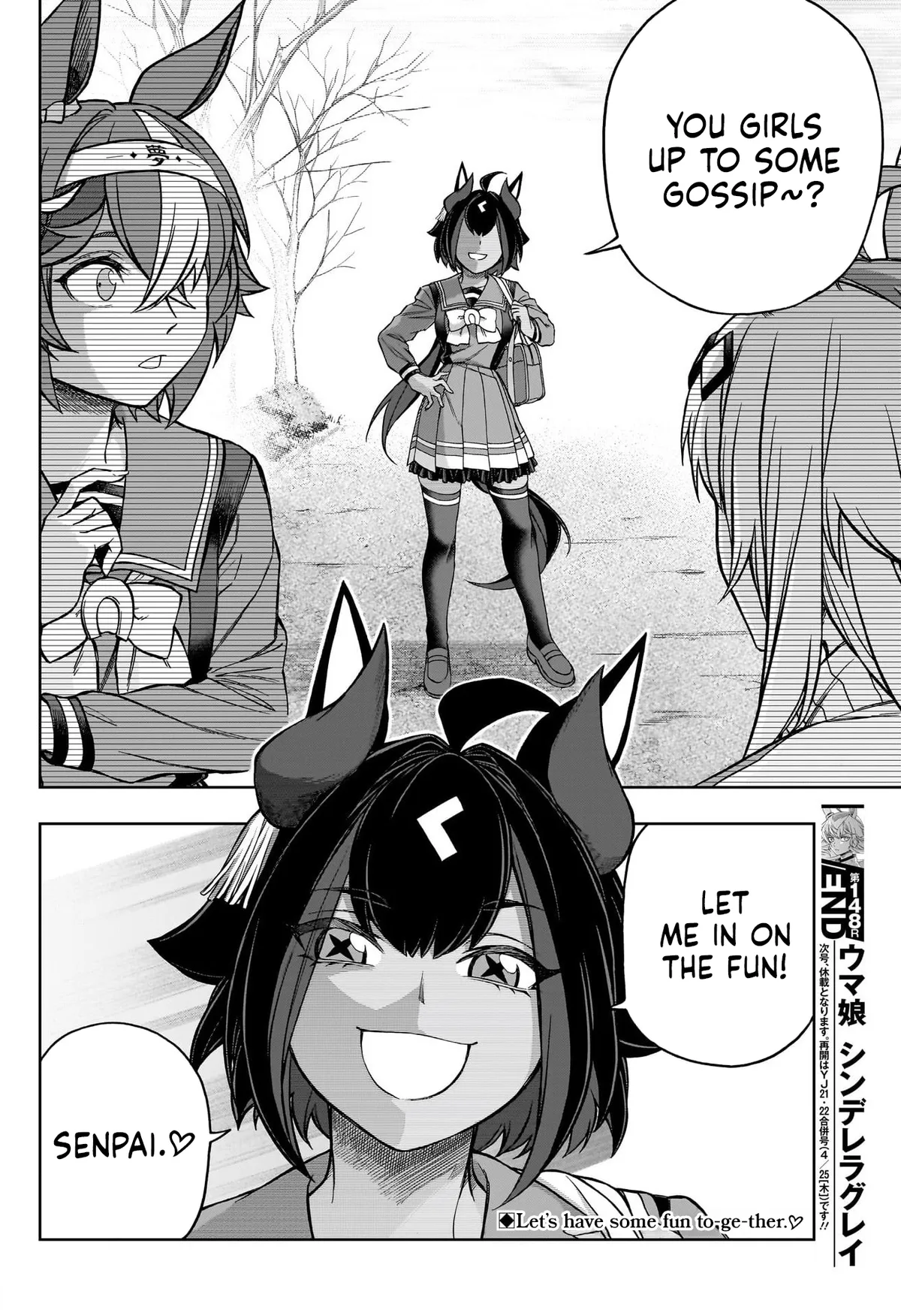
As someone who wasn't familiar with Keiba, Mill Wakaba's introduction in Chapter 148 didn't strike me as someone with a strong role to play in the story. She fit very squarely into the typical kusogaki archetype, what with her arrogant demeanor and cheeky taunting. With reading Namaiki Asahi-chan wo Wakarasetai around the same time as these chapters, her taunting being shut down by Oguri's skipping of prep races fell right in line.
 |
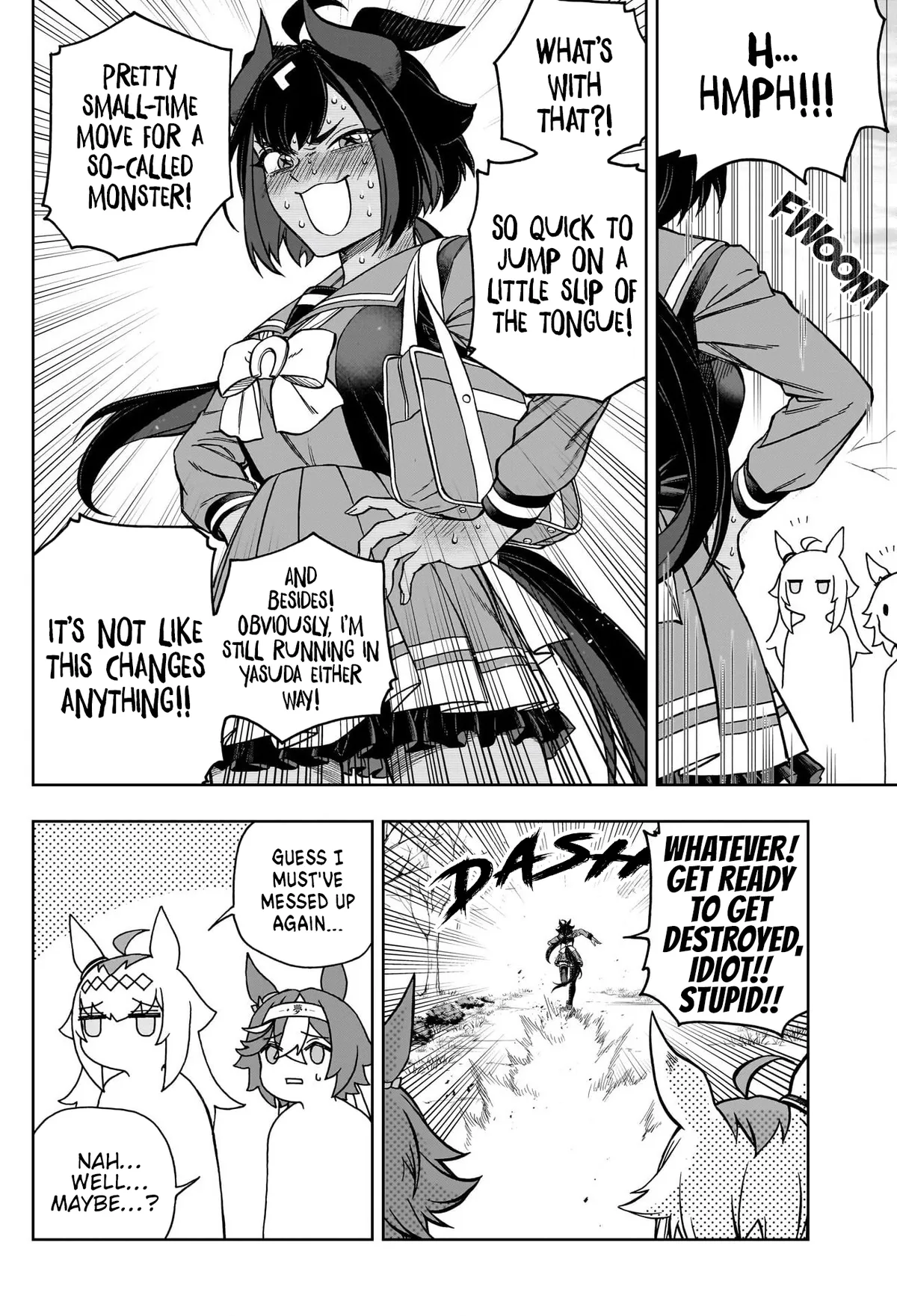 |
When most of the characters are named Uma Musume or have proved themselves as dutiful challengers in their own right with an appropriately heavy gravitas (Obey Your Master, Folkqueen), Mill Wakaba's introduction making her the punchline of a joke made me almost dismiss her out of hand. With Kitahara Joe's reintroduction and Oguri's career seemingly back on the upswing, I was all prepped for Oguri Cap to once again retake her seemingly destined throne along with the trainer we've waited so long for. Mill Wakaba should have just been an interruption to the main event, a rematch at the Yasuda Kinen with Bamboo Memory - a rival we've known for a long time. However, this turned out to not be at all what the race turned out to be. For better or for worse, it was the Mill Wakaba show - which gave a revealing look at what exactly the "The Grey Monster" arc is all about.
Mill Wakaba and the "Gray Monster"
"The Grey Monster" arc follows Oguri Cap's journey after the 1989 Arima Kinen, a race that Oguri would place 5th in - a stain on what, so far, has been a career full of 1st, 2nd, or, at worst, falling to 3rd place in the 1988 Japan Cup (behind winner Pay the Butler and Oguri's famous rival Tamamo Cross).
The "Gray Monster" is a moniker that labels not a racer, but a concept - an unspoken rule eating at the heart of everyone: Oguri Cap is a winner. That is who she is. It is a statement that fans trust with endless faith. Chapter 139 lays it out quite plainly.
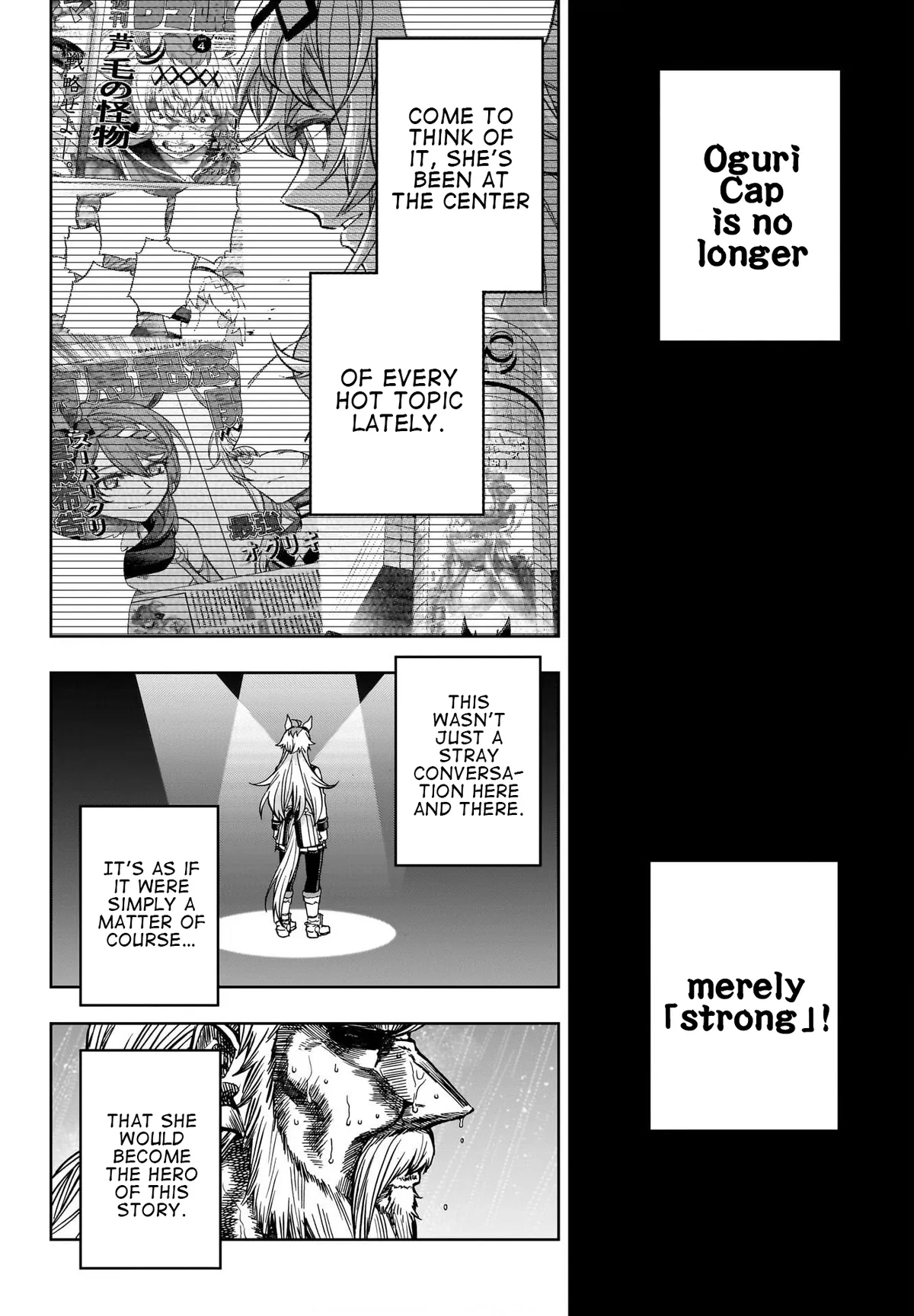 It is the overwhelming inevitability that her opponents are crushed by. It is everything and everywhere, a black hole that sucks out all the oxygen in the air with no escape. This overwhelming presence is what Mill Wakaba and her generation grew up under - the burden borne by the "in-betweeners" - and it is what defines Mill Wakaba's relationship with Oguri Cap.
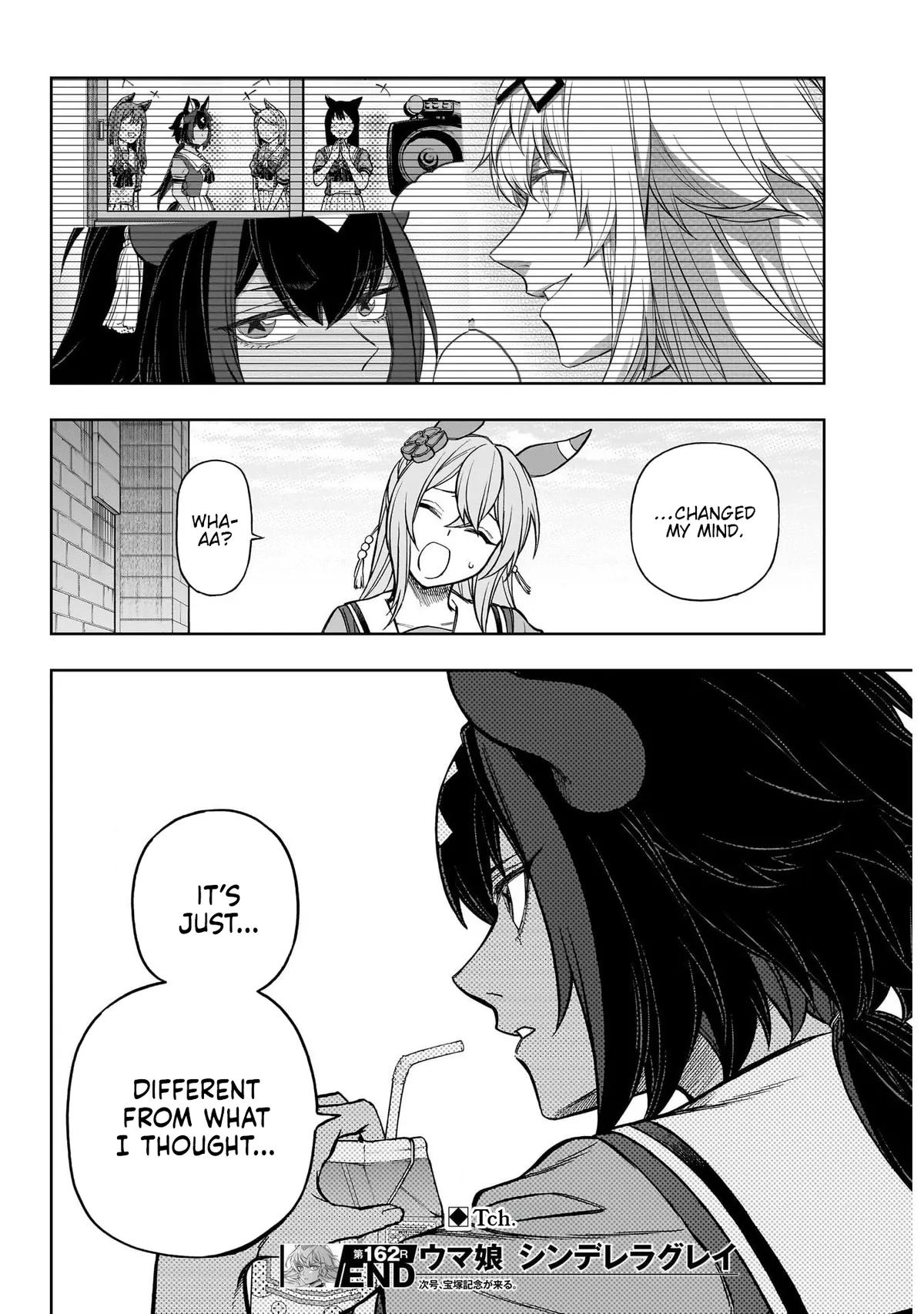
Mill Wakaba and and her genmates did nothing wrong to deserve this treatment It is for this reason that Chapter 162 is one of the most painful - the definition of "you can do everything right and still fail."
It is the overwhelming inevitability that her opponents are crushed by. It is everything and everywhere, a black hole that sucks out all the oxygen in the air with no escape. This overwhelming presence is what Mill Wakaba and her generation grew up under - the burden borne by the "in-betweeners" - and it is what defines Mill Wakaba's relationship with Oguri Cap.
Mill Wakaba and and her genmates did nothing wrong to deserve this treatment It is for this reason that Chapter 162 is one of the most painful - the definition of "you can do everything right and still fail."
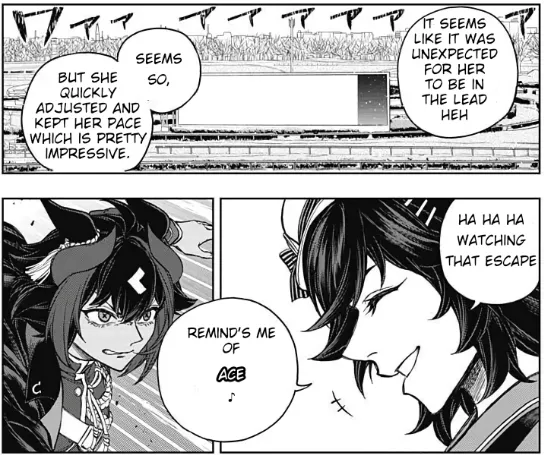
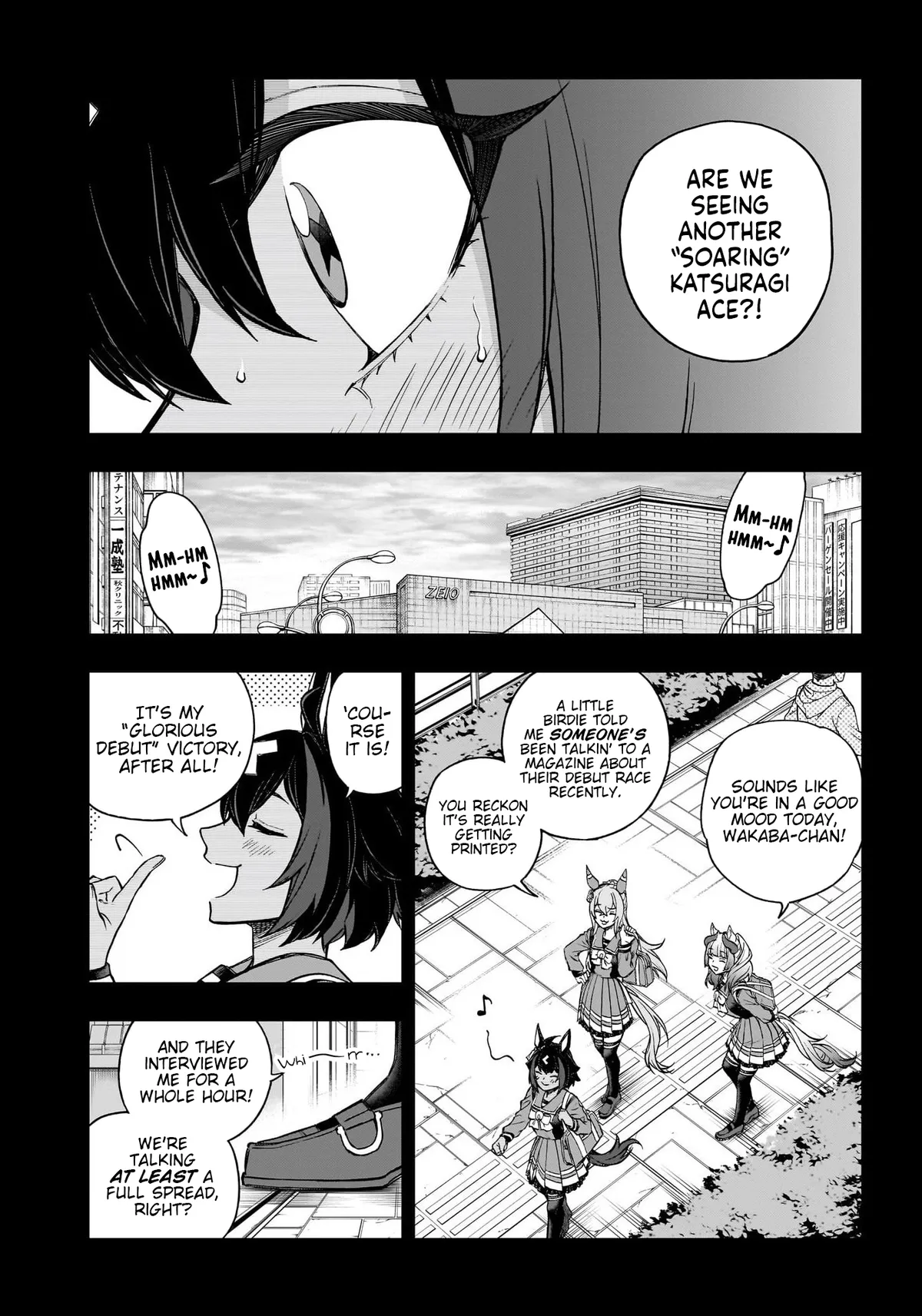 Mill Wakaba's debut win was a dominant 10 length victory - one that drew a comparison to the vaunted Katsuragi Ace who was the first to strike victory for Japan in the Japan Cup (truly the race that leaves a mark in the hearts of all readers). There were high expectations for her, and she was proving her her trainer still had it in him. Mill Wakaba had her friends, her victory, and ambition. Things were looking up. And then Oguri happened.
All Mill Wakaba could do was watch everything be ripped from her. The way that this is illustrated is haunting.
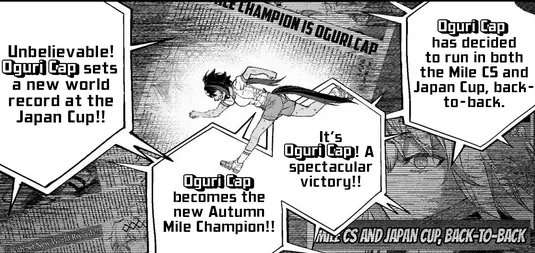 |
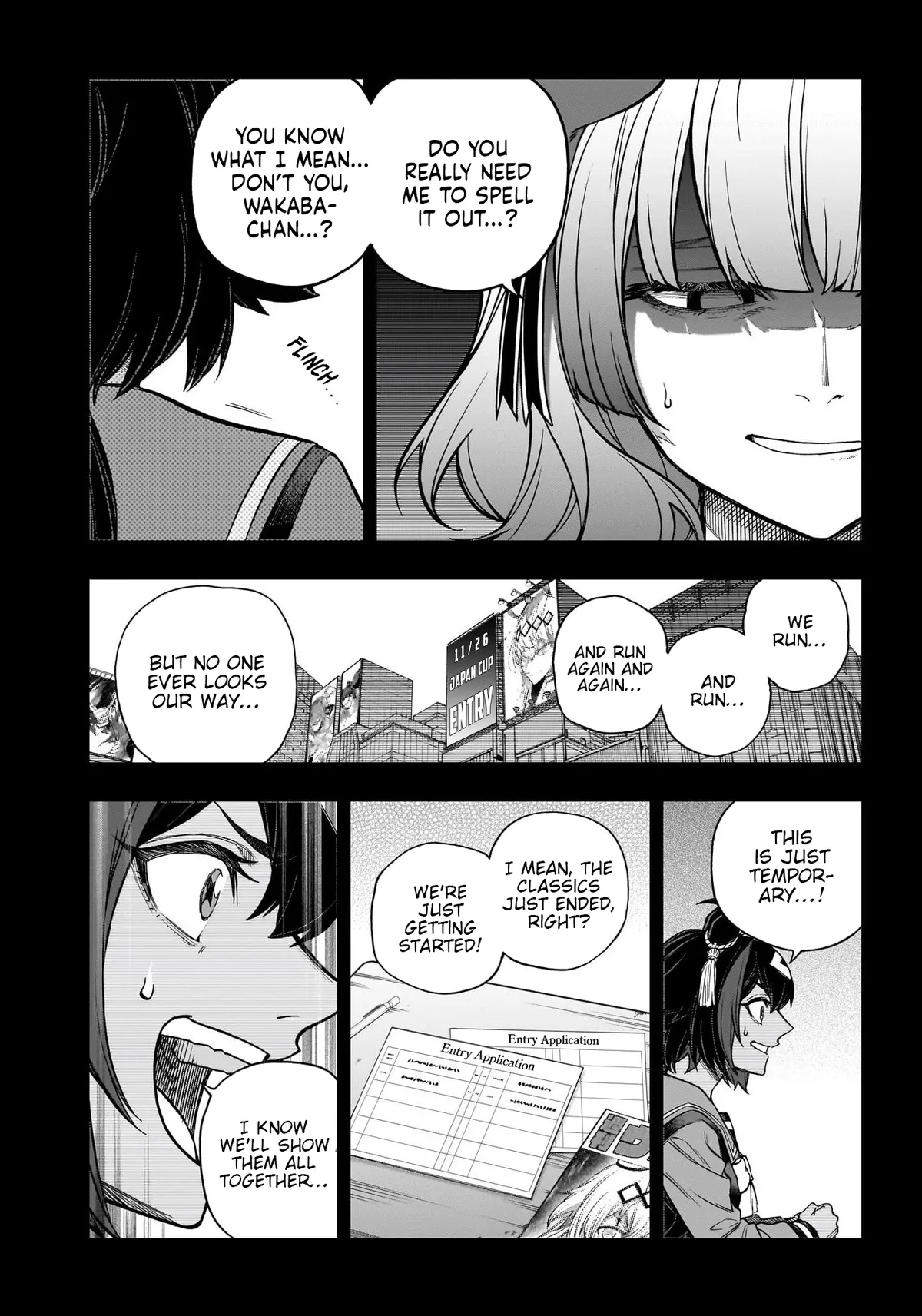
There's one-offs. There's bad timing. But someone will eventually see you, right? Mill Wakaba did nothing wrong. When faced with Oguri's batttle with Tamamo overshadowing her debut, she was able to brush it off - shaken, but not defeated. There was always another race. There was always more she could do. At least, that's what she could tell herself to cope. But as she raced more and more, it was becoming increasingly obvious that this was an endless tunnel to nowhere. No matter what she did, no matter where she went - Oguri Cap was there. Her accomplishments didn't matter. Her running didn't matter. Her existence didn't matter.
Faced with the abyss that was Oguri Cap, it is no wonder that the pressure started to crush Mill Wakaba and her friends. It's one thing to be a rival, faced with an uphill battle. it is another thing entirely to be invalidated as a competitor, to not even register on the radar as relevant. Races are held dear to Uma Musume. Everyone has the desire to shine, to make their mark on the world. Even Haru Urara's career has her experience what it means to want to win, to feel the importance and weight of putting your all into a race. Yet, when winning or losing has no significance and what you put your heart and soul into is just thrown to the side - there is no light left to shine.
 |
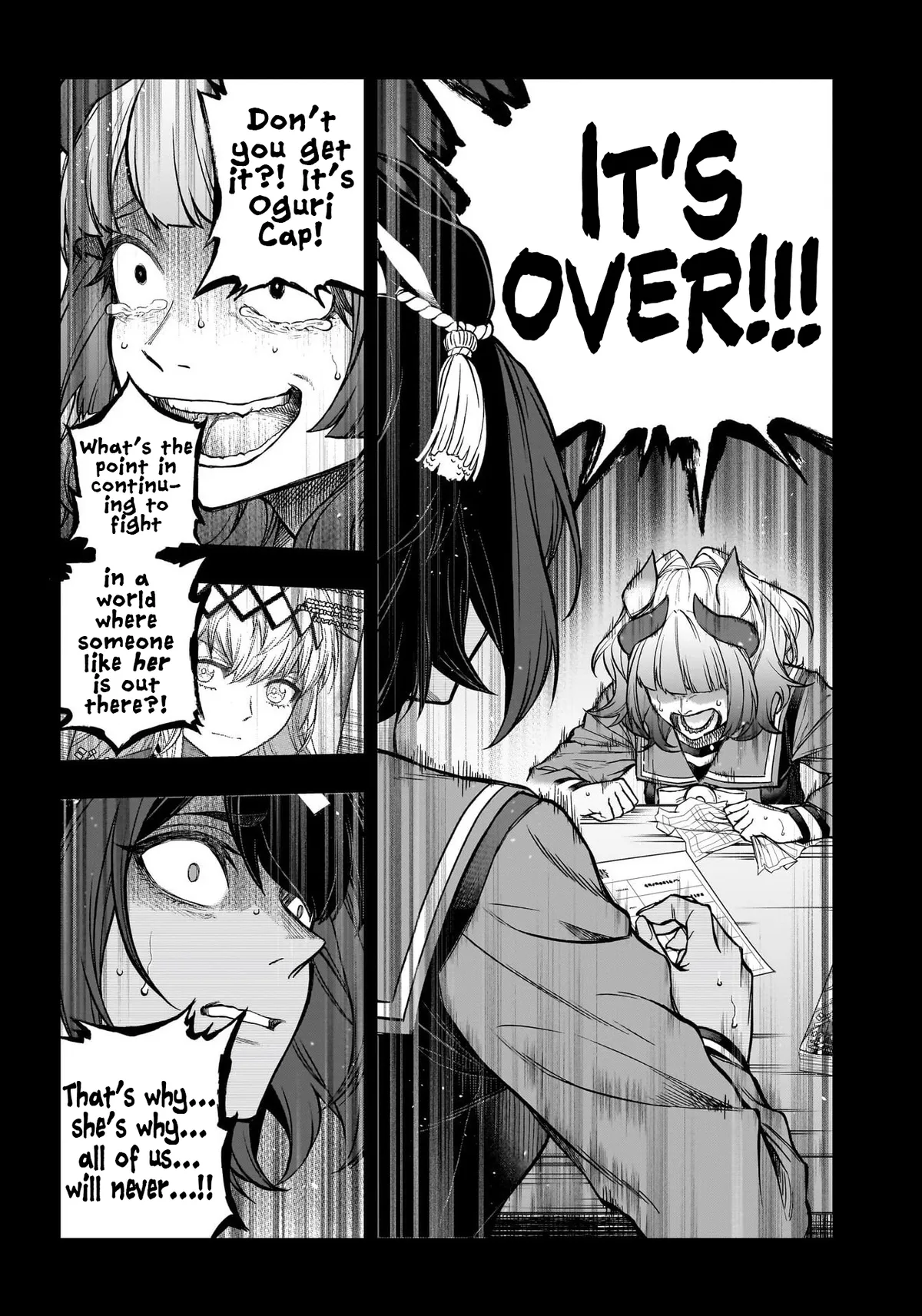 |
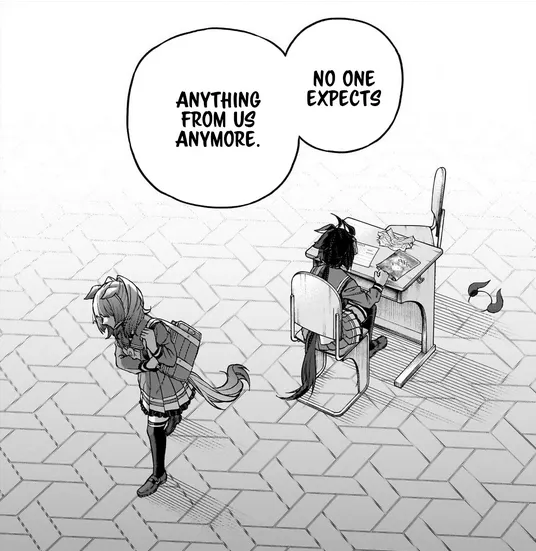
Oguri Cap's existence - the "Gray Monster" - has engulfed them. They are the umamusume with the unfortunate luck of living in the shadow of one generation and being blinded by the shining of the following generation. It is a hateful circumstance. And it is one that forces one of Mill Wakaba's friends to break - not under the pressure of expectations but from the numbing void that comes from not having any.
 |
|
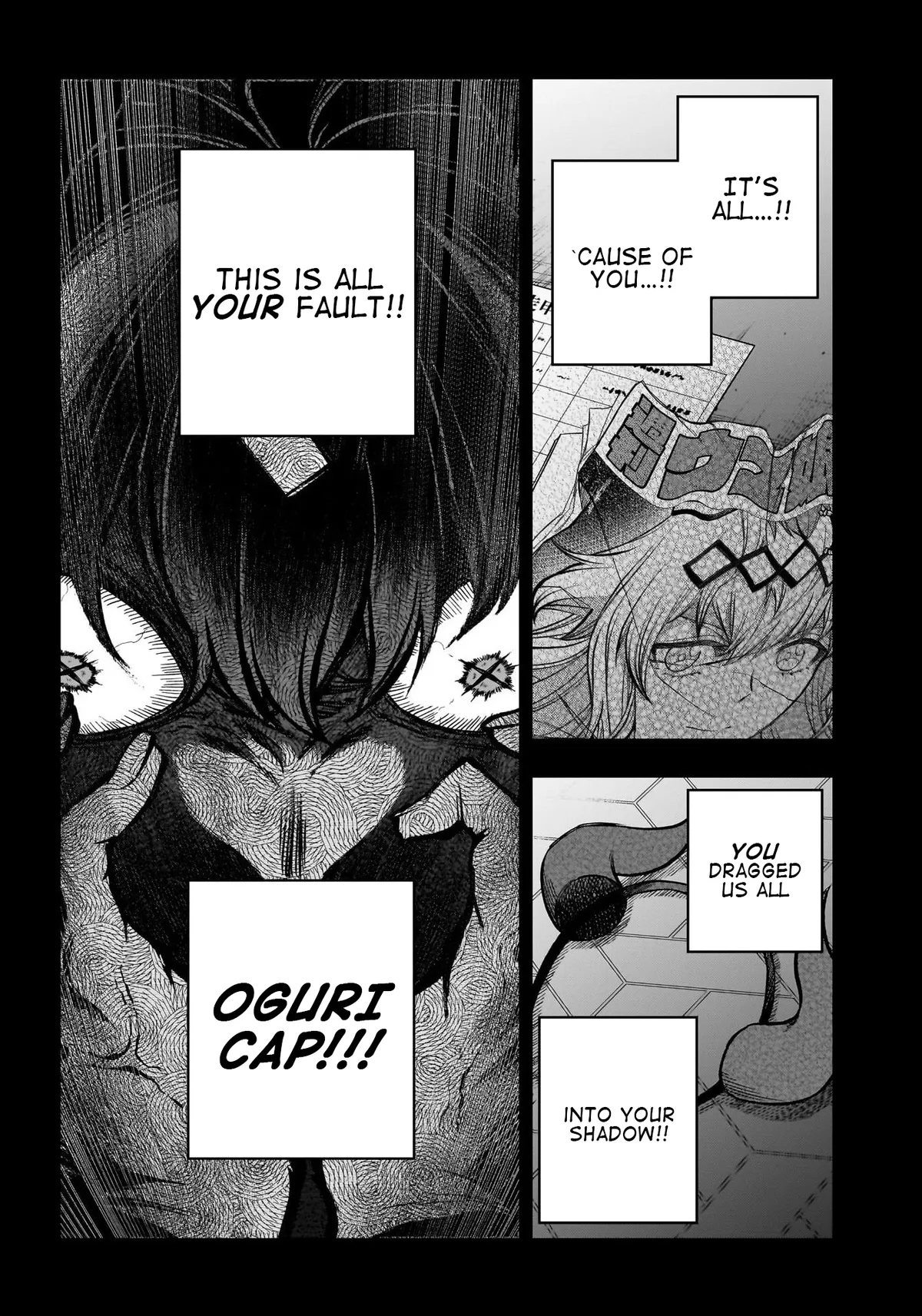 |
From across the screen and through pages on magazines, Oguri Cap has broken Mill Wakaba's heart. Her dream of making her mark with her friends has died. The worst part is that it truly wasn't Oguri Cap's fault. Just like one cannot ask the sun to stop shining, one cannot just ask someone to please stop doing her best. Yet, Mill Wakaba had tried living her life earnestly just to see her and her friends tossed to the side in favor of Oguri Cap. If the world was that enamored with Oguri Cap, it was no longer good enough to just be a successful racer - she would have to challenge the abyss directly and prove to the world that she could overcome the "Gray Monster." With that, Mill Wakaba's running had purpose again.
Fighting the Beast
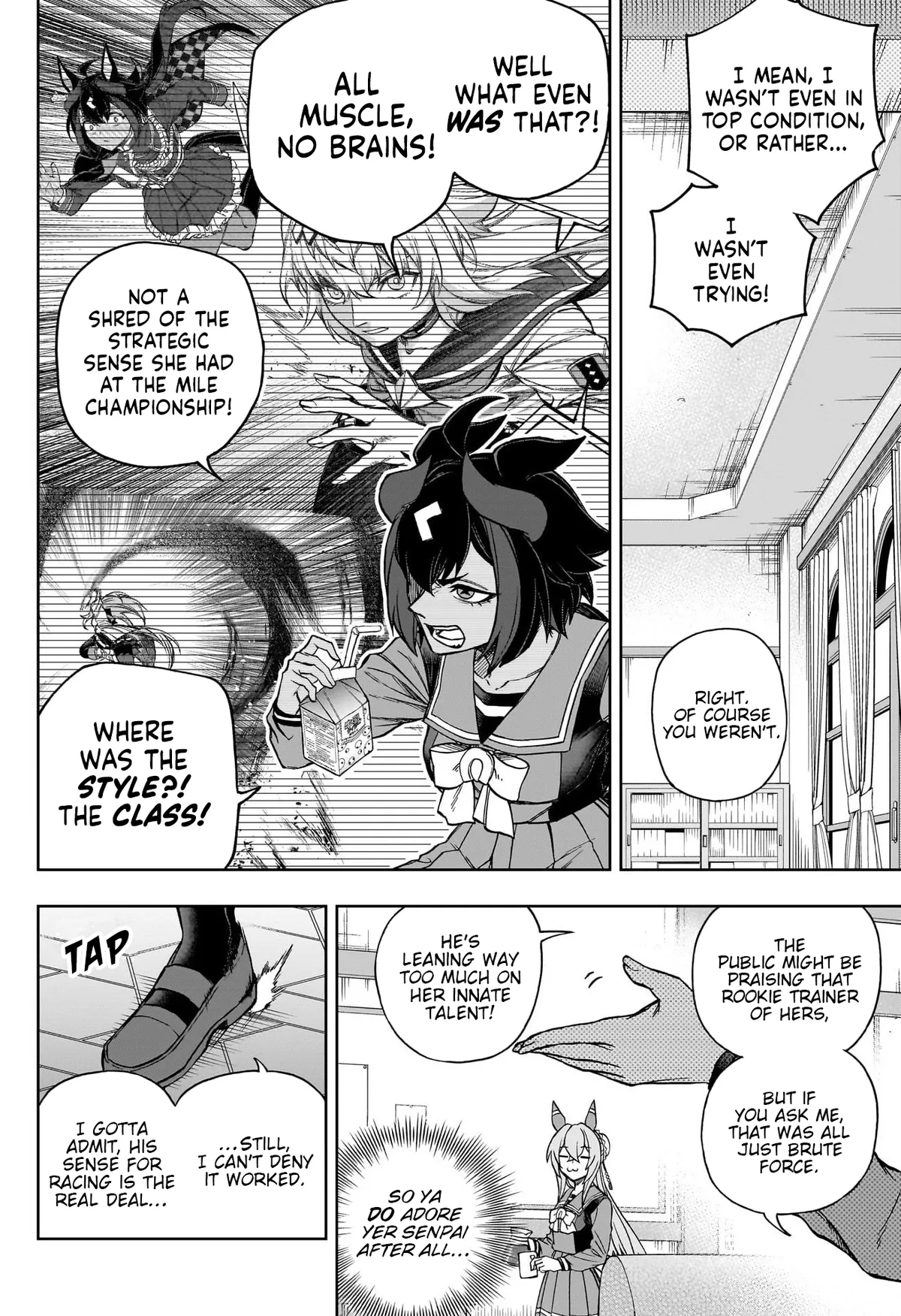
Having spent her entire career in Oguri Cap's shadow, it is no surprise that Mill Wakaba has put Oguri's running on a pedastal. After getting her first taste of racing against Oguri Cap at the Yasuda Kinen, Mill Wakaba's litany of complaints of Oguri's performance just underlines her own idolization of Oguri - something that Bright Rock catches onto.
 |
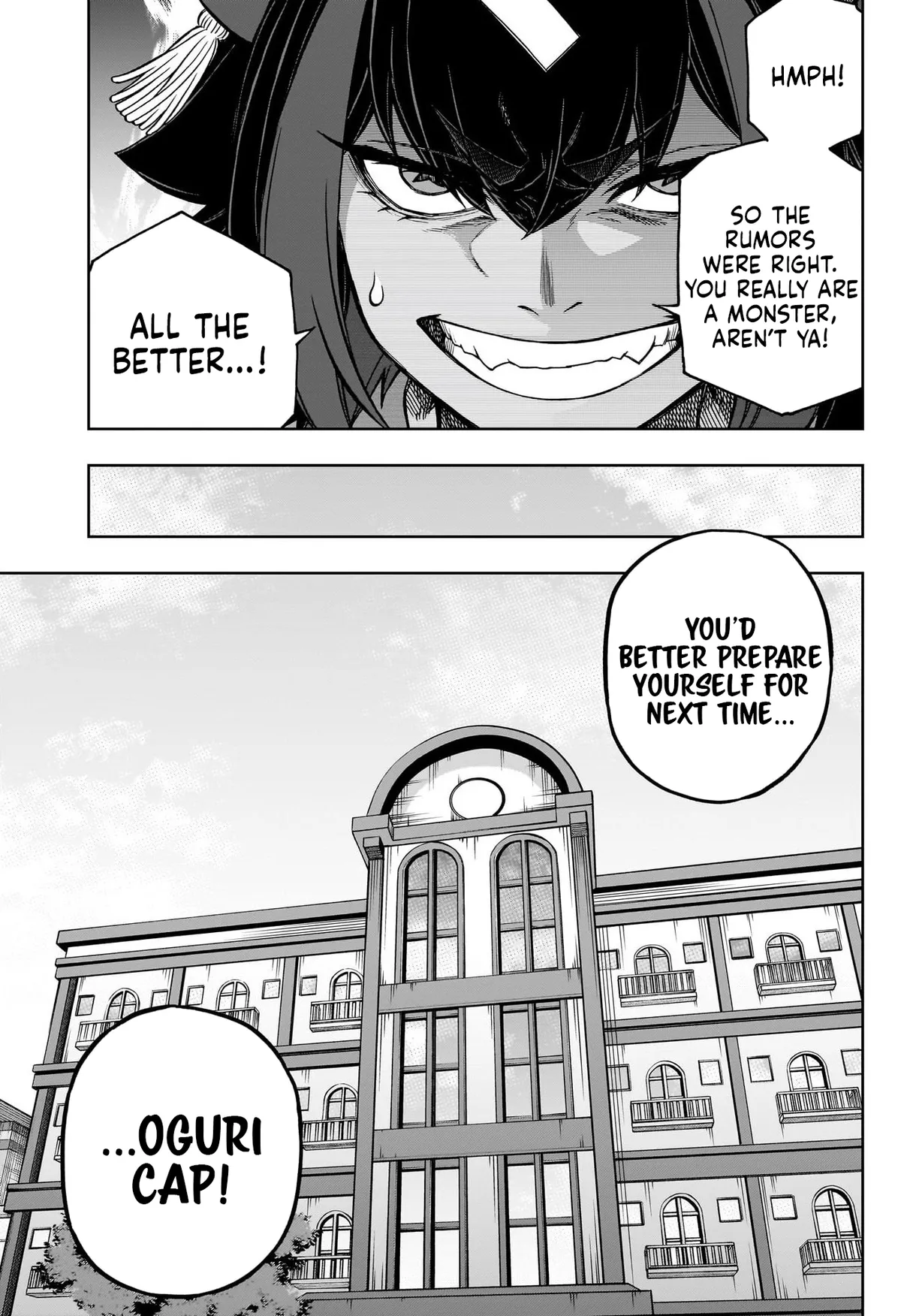 |
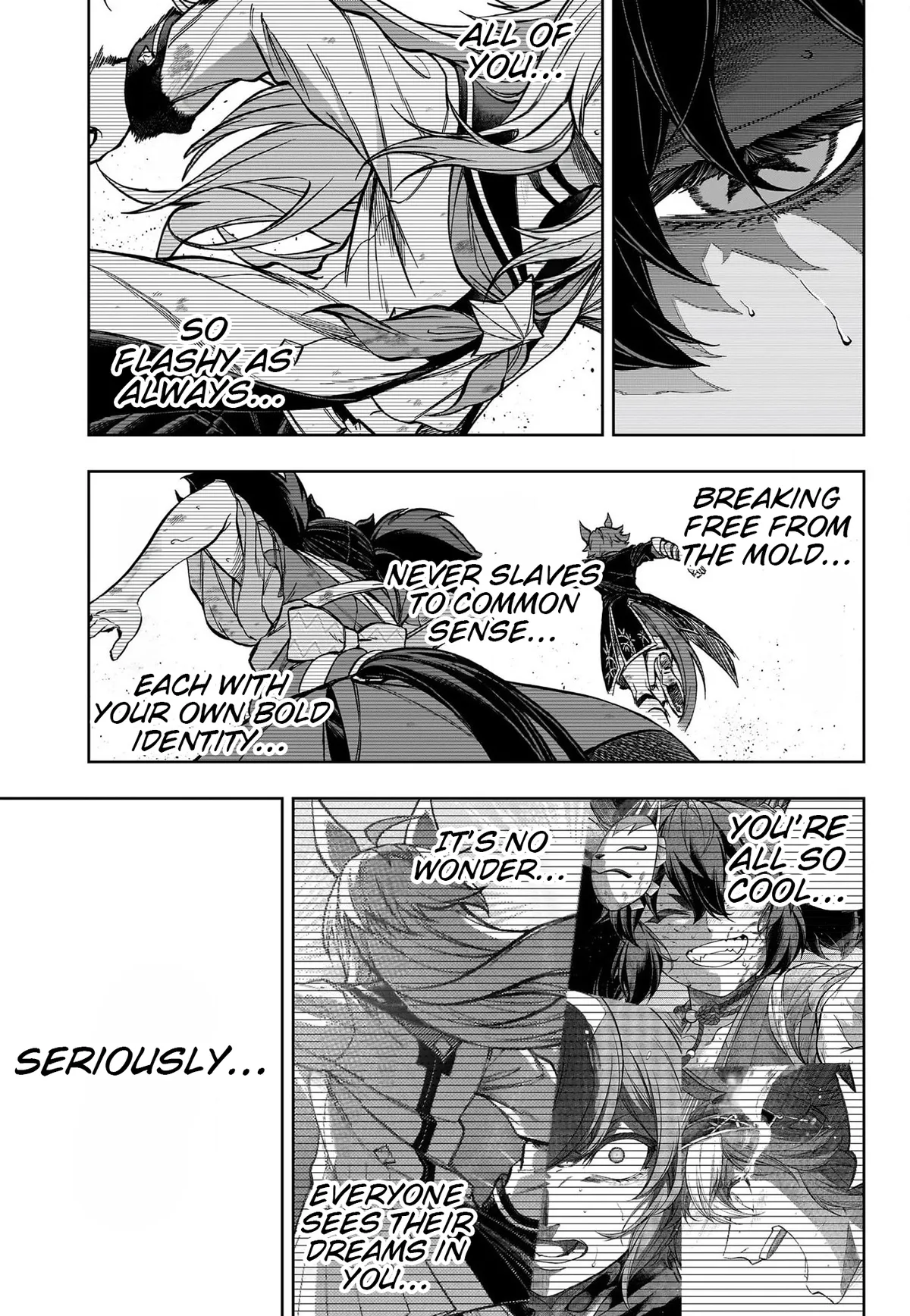
What enchanted me about Mill Wakaba going into the final straight is that she knows she's the underdog, tossed into circumstances beyond her control. An era of monsters threatens to bury her - Oguri Cap, Inari One, Bamboo Memory, and Yaeno Muteki are all blazing their paths forward. She sees what the world sees in them, shining stars on the track that carry on the dreams of their trainer and their fans. And as such, there is meaning in defeating them. The world might have failed to acknowledge Mill Wakaba's rise, the amount of effort she put in, and even her very existence outside of Oguri Cap - however, the track is where she can set her own terms. For a generation throw into the shadow, Mill Wakaba represents their revolt against their seeming fate.
 |
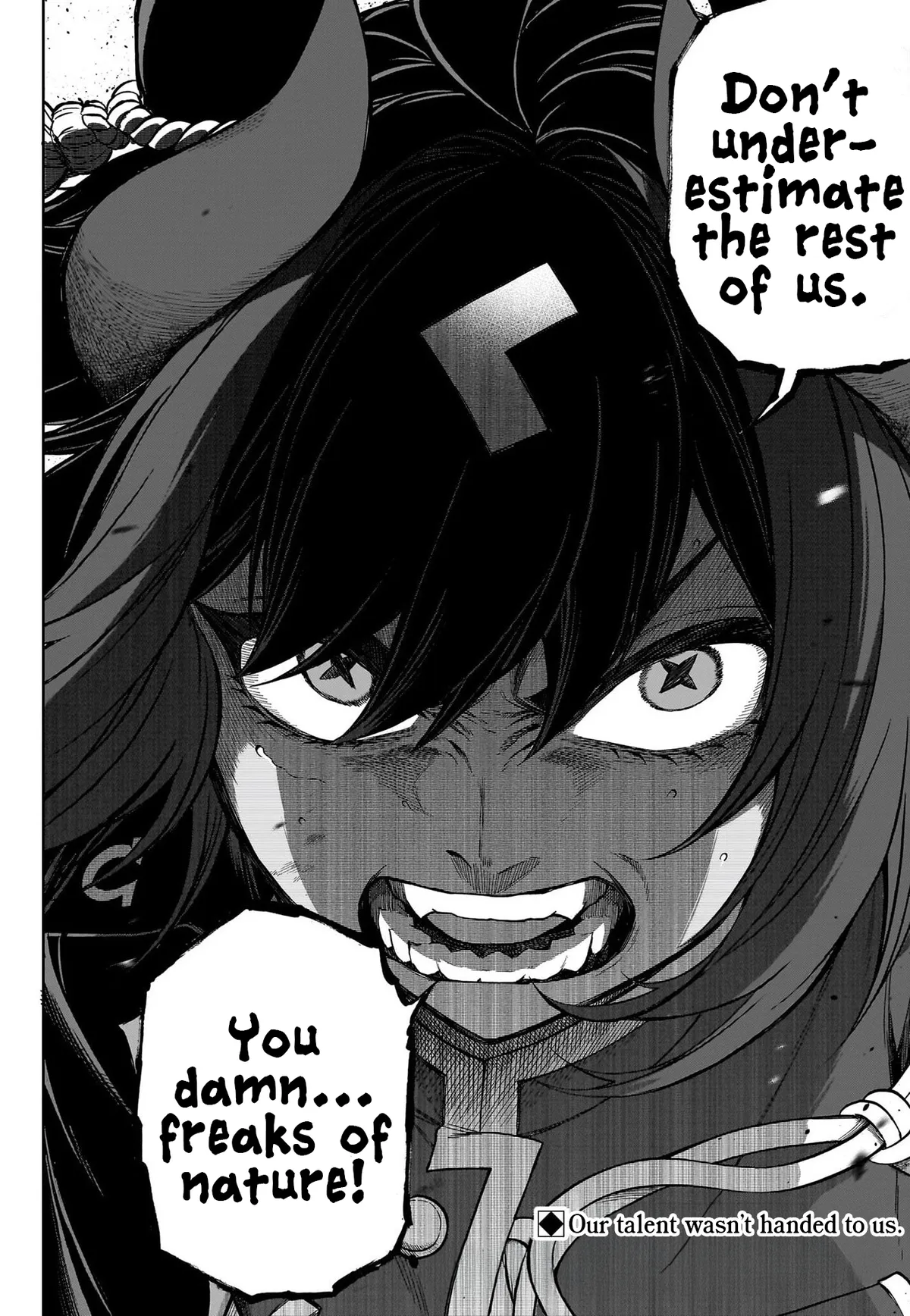 |
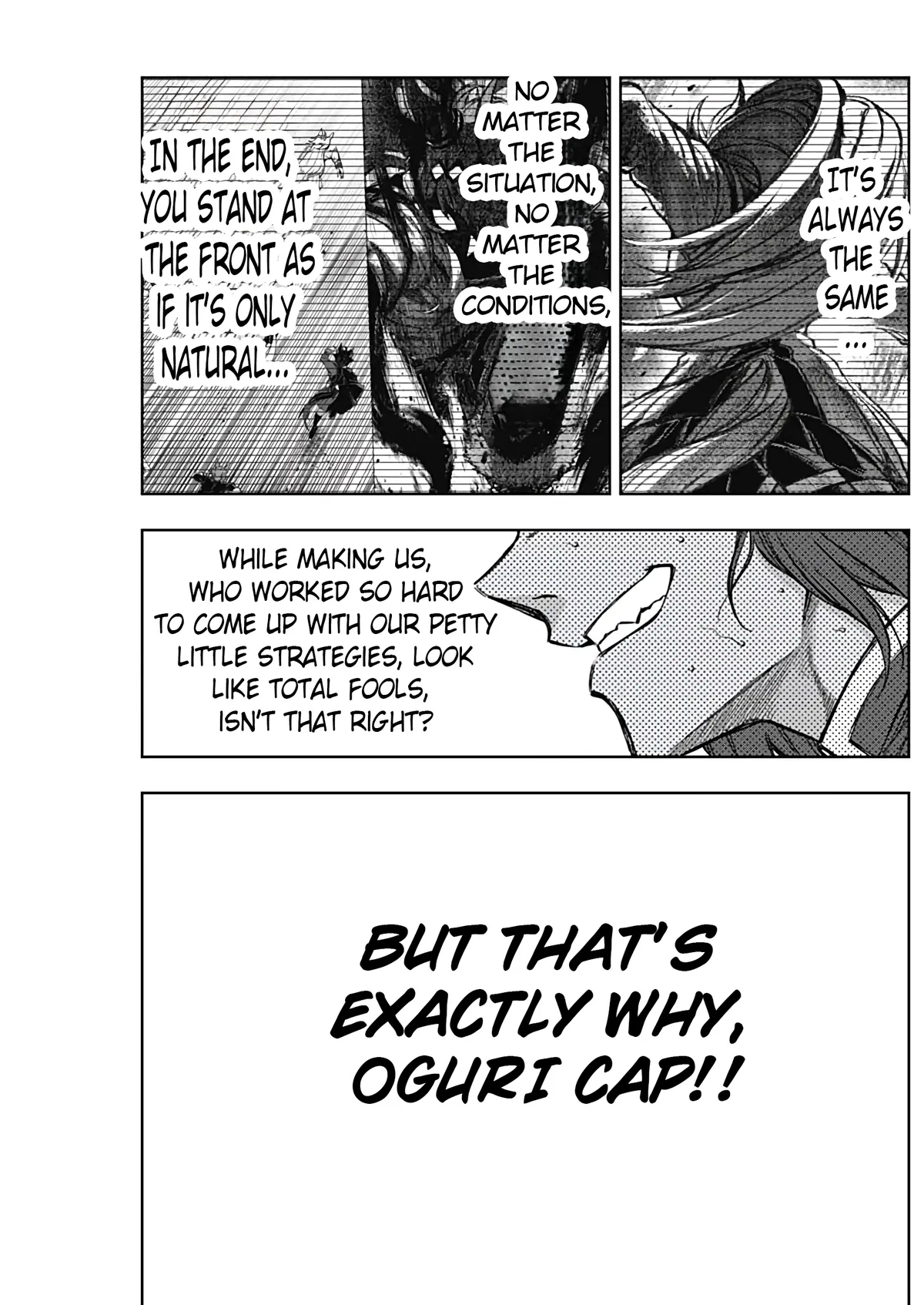
Mill Wakaba needs this stage. She needed to prove that the "Gray Monster" was killable through her efforts, that the time and effort she put into training could overcome the power that had elevated Oguri Cap in the first place. She says so directly in Chapter 169, and it is also a revealing statement. Mill Wakaba had faith in Oguri Cap - that once again, Oguri Cap would pull out a wild last spurt that would turn the world on its head. Finally, Mill Wakaba could face the abyss that had ruined her life head-on.
 |
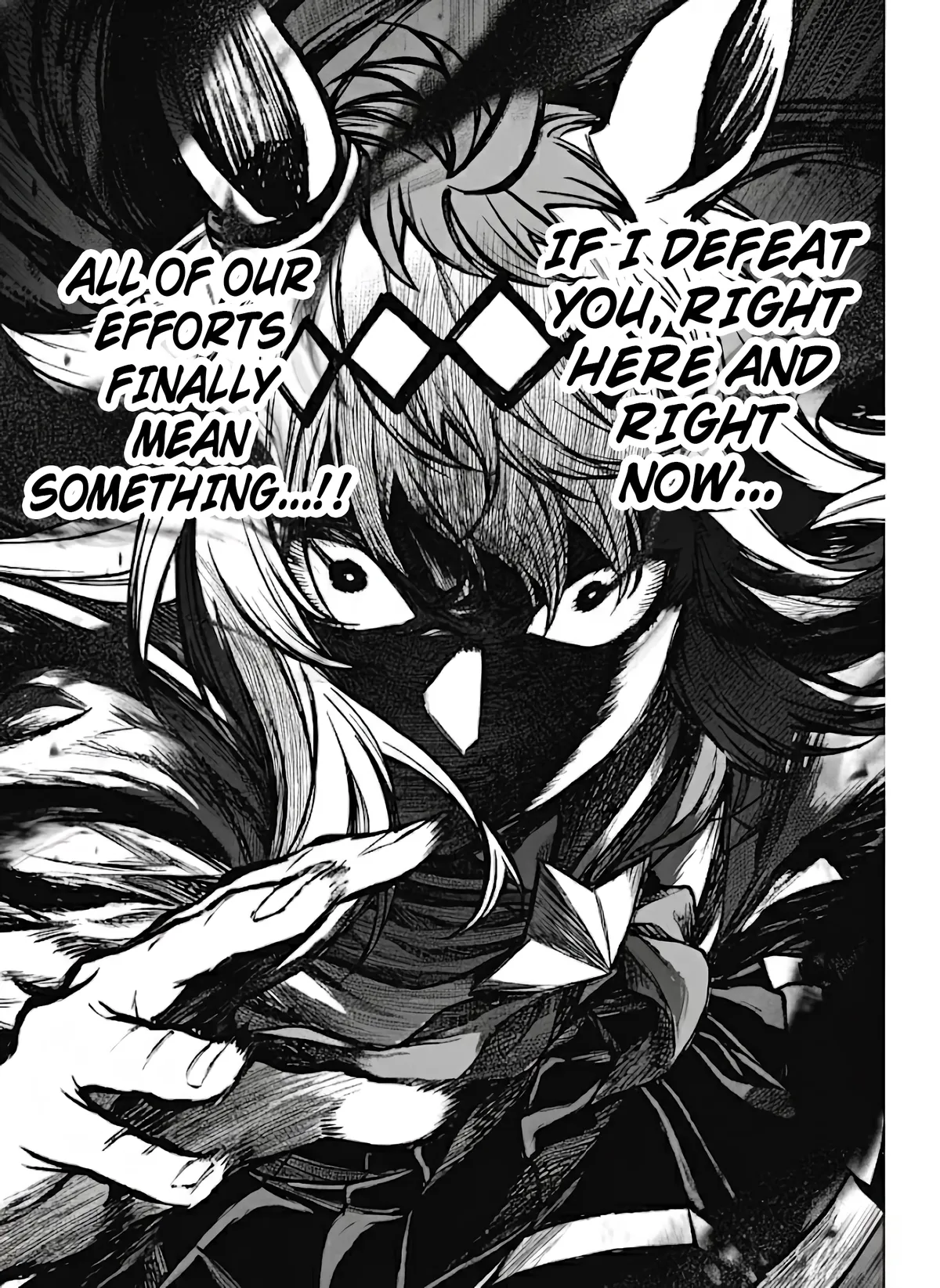 |
It would only be by proving she could overcome it - that she could stand victorious no matter what crazy power Oguri could tap into - that Mill Wakaba would then be able to reclaim the light that was taken from her generation. She would be able to stand proudly and say that finally, she had surpassed Oguri Cap: out with the old, in with the new. Yet, that isn't what happened. And it tore her apart.
 |
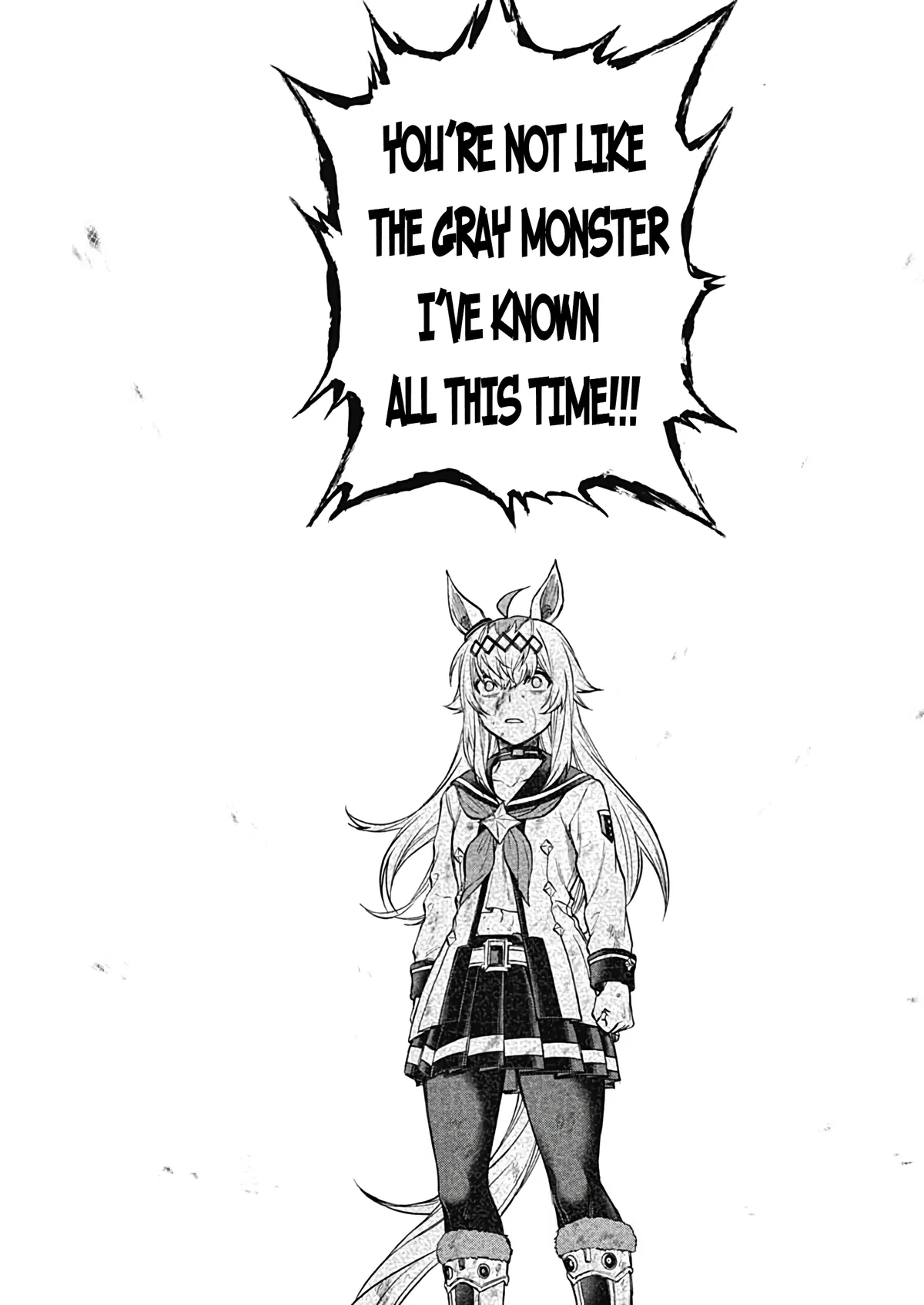 |
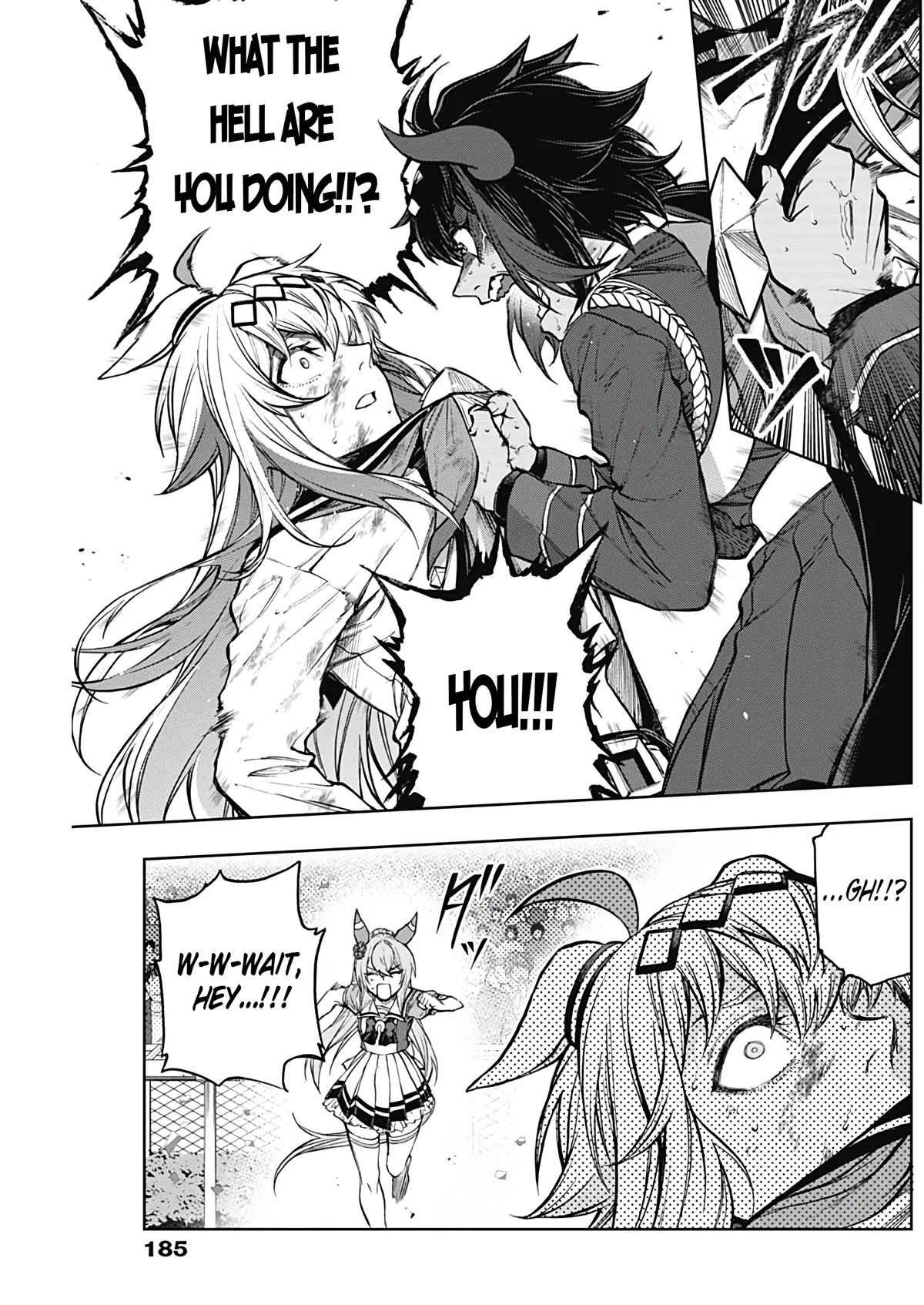
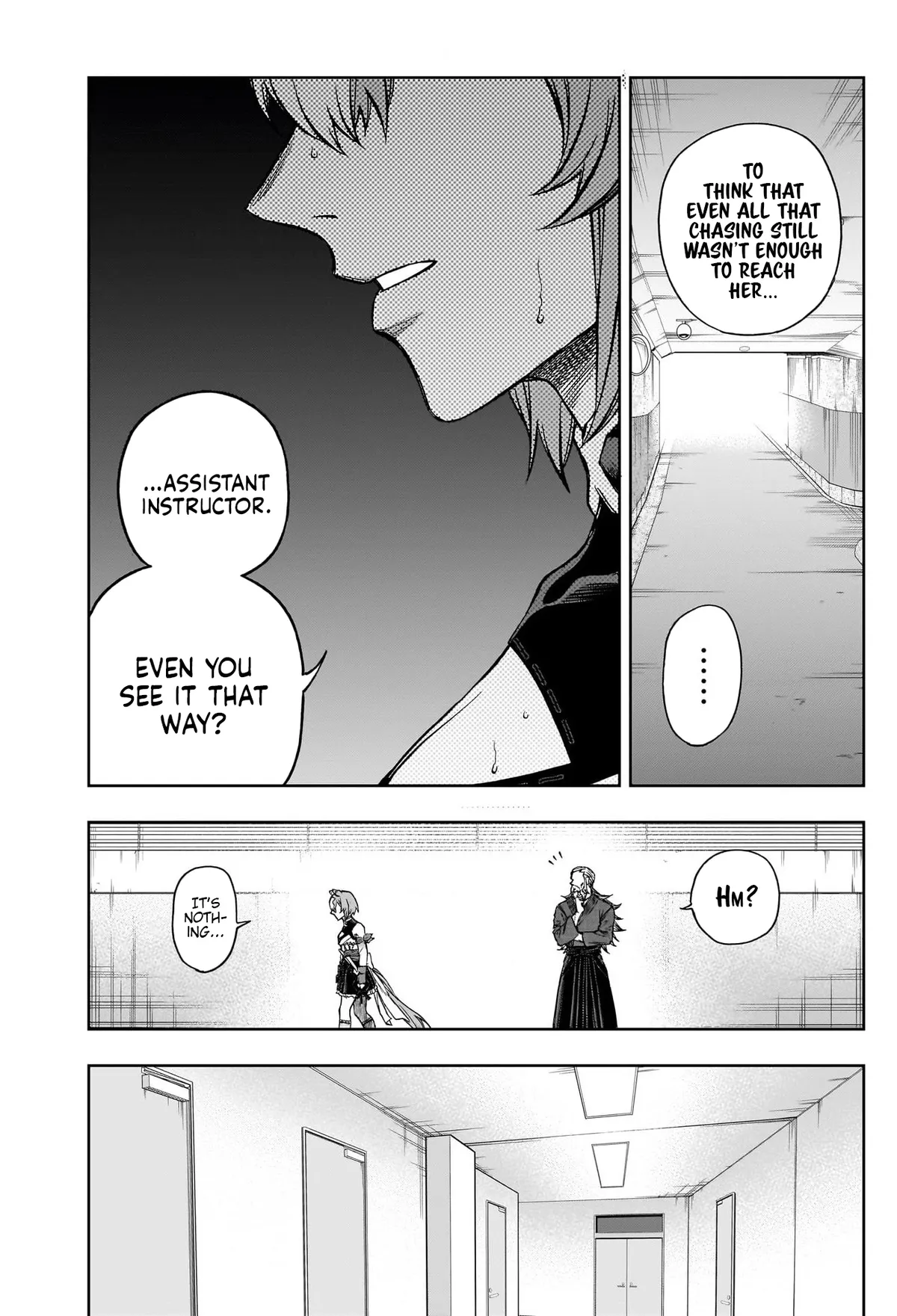
Mill Wakaba's rage against Oguri Cap at the end of the Takarazuka Kinen is a vicious representation of the weight of Oguri Cap's existence at this point. Throughout the story, we've seen rivals butt heads against Oguri Cap. However, the "Gray Monster" moniker begins to distort the sense of rivalry - something that Yaeno resentfully notices in her trainer in Chapter 156.
 |
There is a sense of unspoken dominance in Oguri's story, bolstered by her role as the protagonist: "Of course she'll win, she's Oguri Cap." This is what Mill Wakaba is chasing after, and why she is so resentful of Oguri's performance at her performance at the Takarazuka Kinen. She had beaten Oguri, but not in a way that anyone would truly give her credit for. She had beaten a weakened Oguri, not someone who's defeat would mark the end of an era. Her ego - her very reason of being - was based on overcoming the monster that had plagued her generation. If that monster was no longer around, then really: what was the point of her struggle?
Once again, Mill Wakaba was plunged back into the shadow of Oguri Cap - a footnote in the story of the famed runner's injury. Her revolt which aimed at tearing away the peoples' eyes from the 'monsters' of the previous generation had failed. She needed another race, another chance to prove that it wasn't just fluke, another chance to put down the abyss and prove that she was worthy of being the next star - she enters the Autumn Tenno Sho.
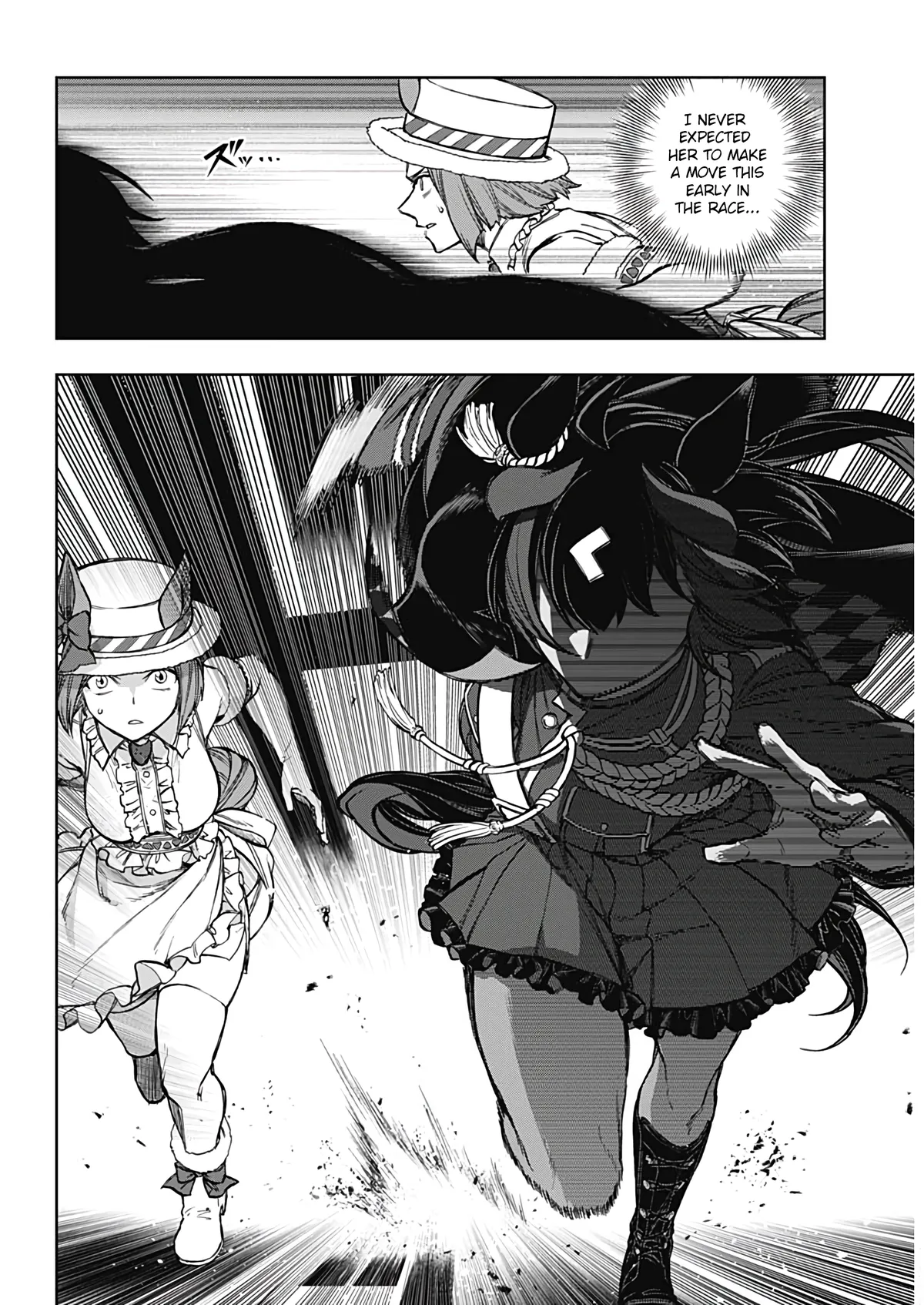
The Autumn Tenno Sho is where we truly see things come to a head. Mill Wakaba is back and ready for revenge. From the get-go, she's out for revenge. The only thing in her eyes is Oguri, enough that she immediately follows as soon as Oguri starts her first move in the race.
 |
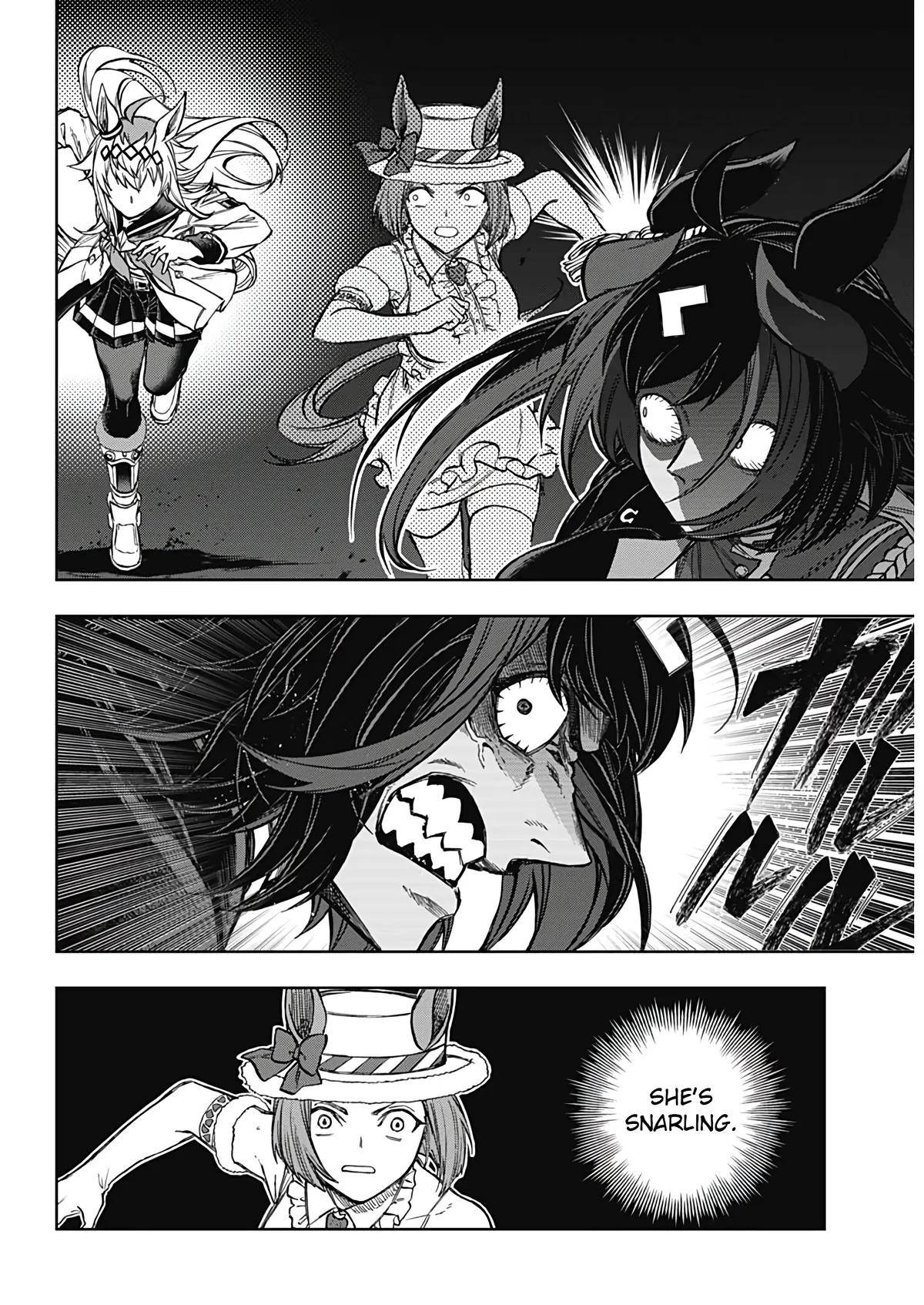 |
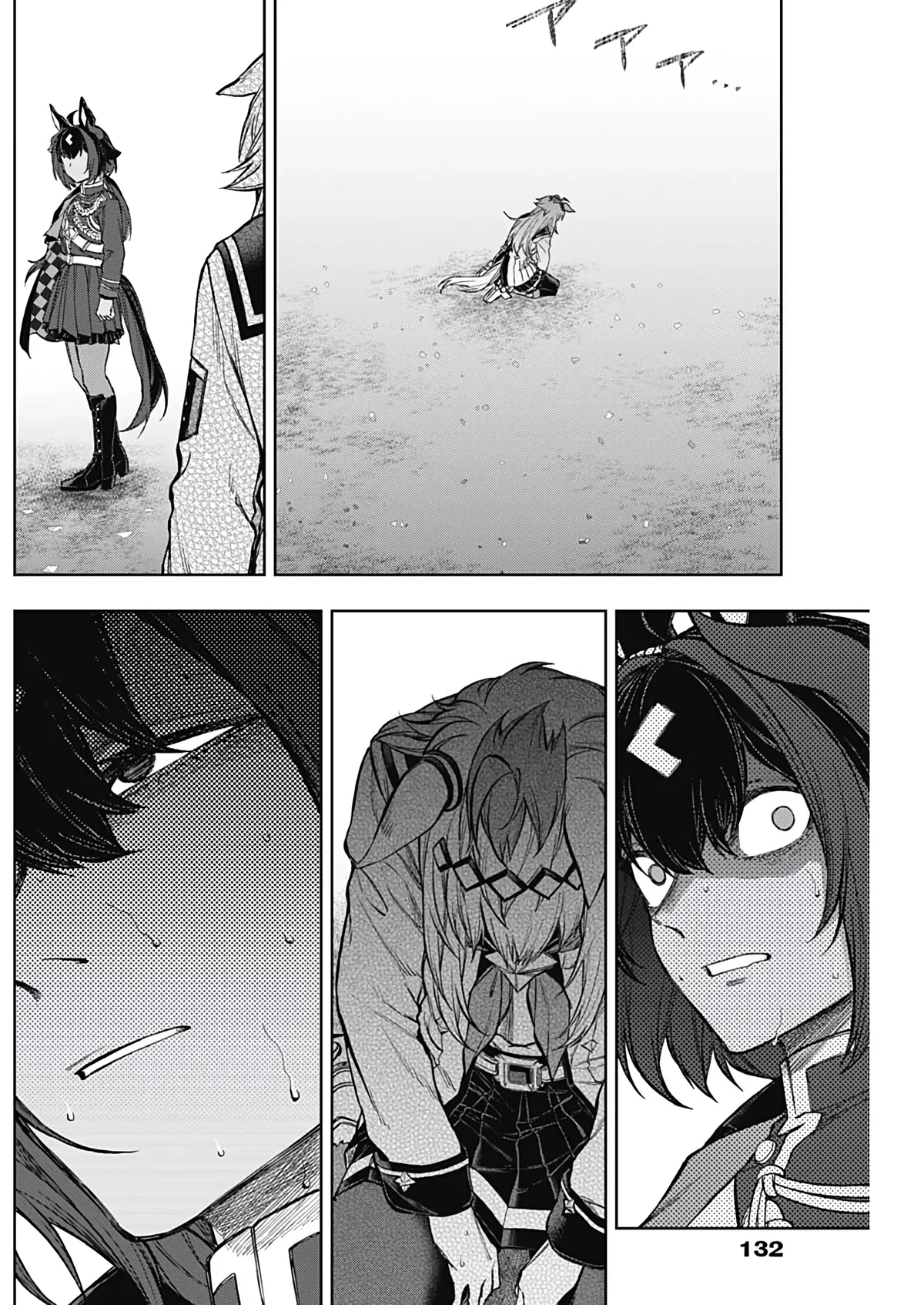
During this race, both Mill Wakaba and Yaeno Muteki are laser-focused on defeating Oguri, driven by a need to destroy the "Gray Monster." However, their motivations also unveil the weight that has been put on Oguri Cap. MilL Wakaba is chasing Oguri to kill her demons, to stomp the monster out who had broken her. To her, victory is just not enough. She needs the "gray monster" to exist, to be someone to chase after and fight - Oguri Cap be damned. Her anger, her hatred - she needs Oguri to accept the way that she has distorted the world around her. She can't allow Oguri to just run away, like she seemingly did during the Takarzuka Kinen. For the sake of her friends, for the sake of her effort - Oguri must be one the standing at the top of racing.
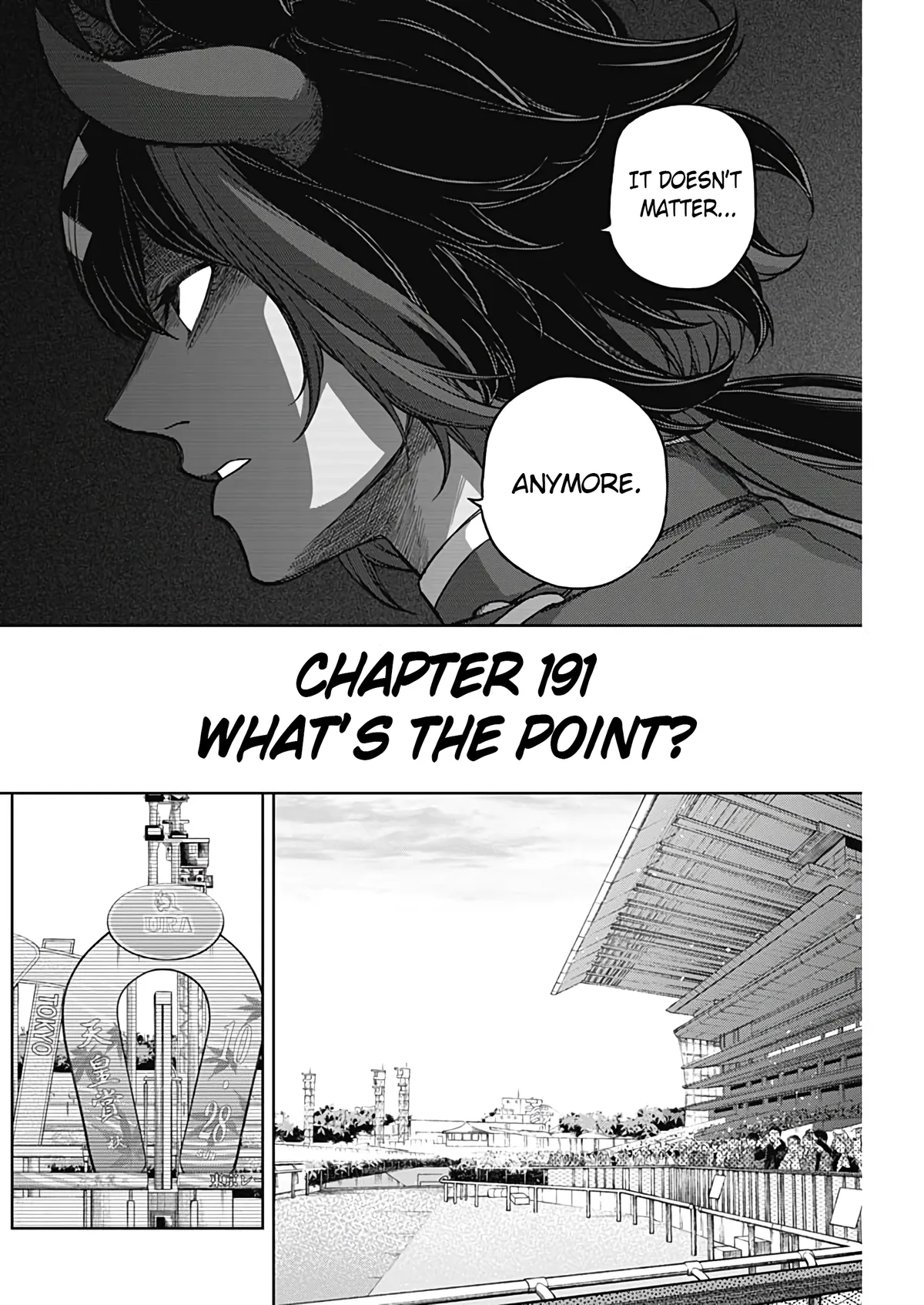
Mill Wakaba represents the responsibility that Oguri feels, the duty to win, the duty to carry on the legends, and the duty to never fail. The living embodiment of the pressure that Oguri Cap feels as she hits the 200 meter marker at the end of the Autumn Tenno Sho. No one can give Mill Wakaba the release she needs if its not Oguri Cap. And so she has to race, she had make that miracle spurt. And when she doesn't give Wakaba what she wants, she too gives up on Oguri. Nothing matters anymore.
 |
 |
Contrast this with Yaeno Muteki, the winner of the Autumn Tenno Sho. Her victory over Oguri Cap is a solemn one, an apology to the girl that was left to burden the world for so long. Whereas Mill Wakaba had only wanted to chase her dream of defeating the monster, Yaeno Muteki is the only one who's aim was to wake the world up.
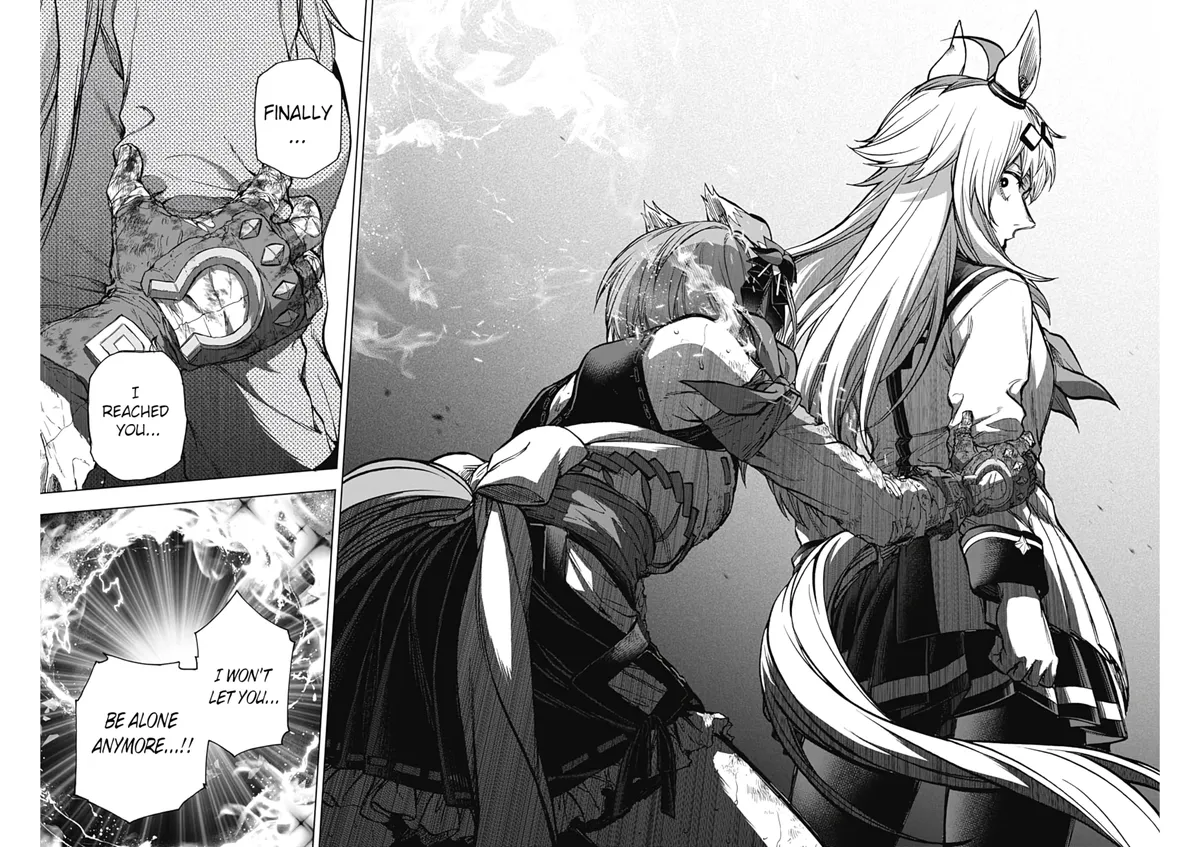 |
The "Gray Monster" and the boundless faith put into Oguri Cap had stopped becoming a gift a long time ago. The shadow that had engulfed Mill Wakaba and her generation had too engulfed Oguri Cap herself - someone who had slowly defined herself with the images projected onto herself by others like Mill Wakaba: the always victorious racing machine who dominated with her spurt. The forlorn scream from Mill Wakaba at the Takarazuka Kinen reappears in Chapter 194 as one of the three voices haunting Oguri Cap as she is finally broken from the overwhelming pressure of expectations.
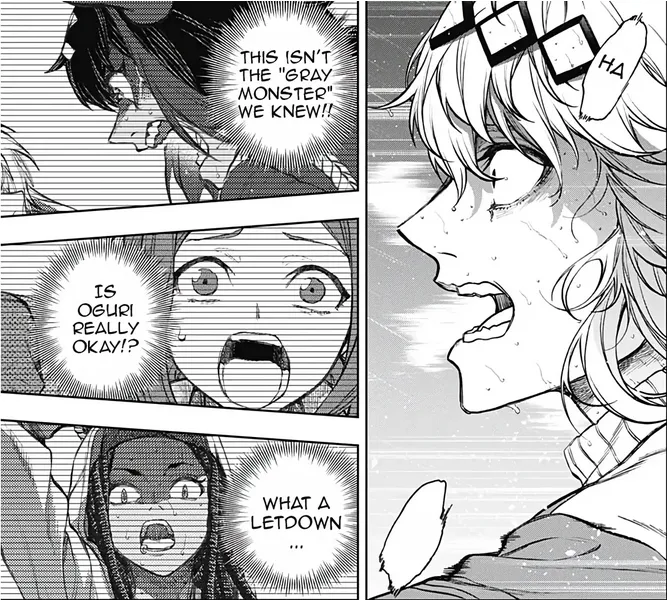 Chapter 195 just further emphasizes the way that Oguri Cap has succumbed to the identity forced onto her. Of course, Oguri Cap will be in racing shape. She'll be back in no time and taking names. That is what is it means to be the "Gray Monster." If she can't reach that - is she really Oguri Cap?
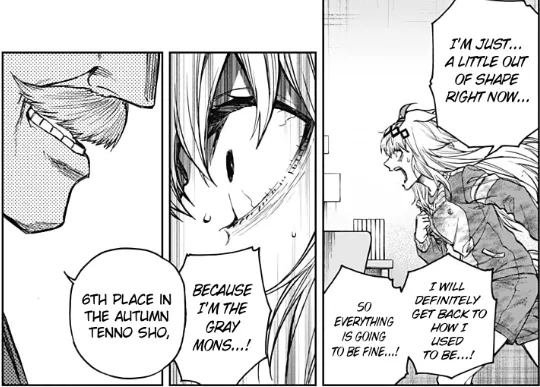 |
This is what Yaeno Muteki was so scared of, and why she had felt an obligation to win. The concept of the "Gray Monster" was blind to the racer who had to taken on that mantle. Oguri had long stopped running for herself. Instead, it was to fulfil the mold that others had laid out for her. Racers like Mill Wakaba did not need Oguri Cap - they needed the "Gray Monster." And so, Oguri obliged. Constantly, without fail, until she eventually broken down.
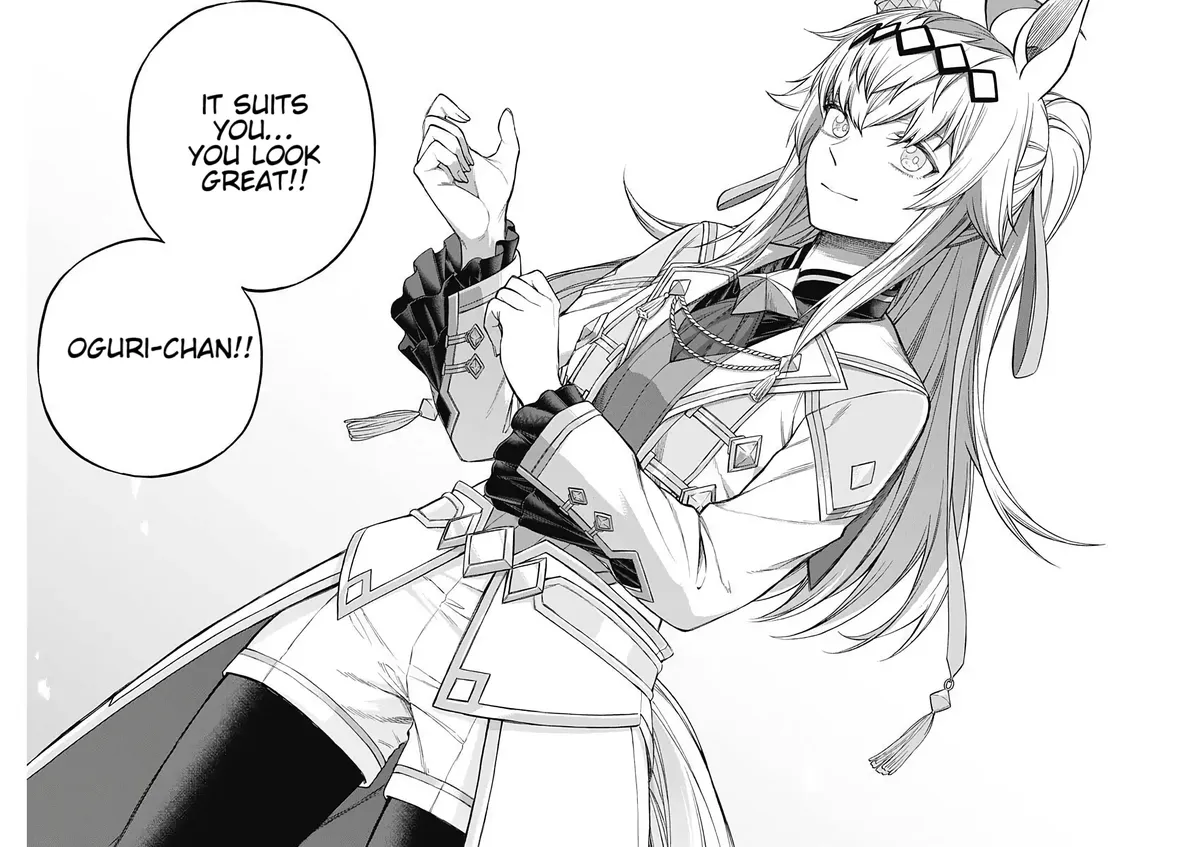
It was thanks to Yaeno Muteki's efforts and Kitahara Joe that Oguri Cap was finally able confront that gap between the "monster" and the girl named Oguri Cap. Onto the Arima Kinen steps not the "Gray Monster", but Oguri Cap.
 |
We see Mill Wakaba stepping onto the turf in Chapter 205, a confused expression on her face. It's as if the girl who passed her by doesn't even register as the same person.
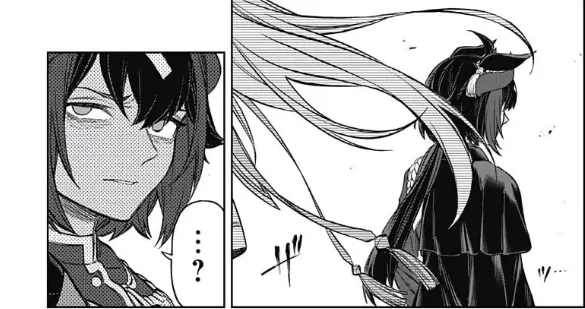 |
And in a way, that's true. For Mill Wakaba had always only ever really looked at the "Gray Monster" - every time she had brushed against Oguri Cap as a person, she's faltered. We see this in Chapter 162 after she witnesses Oguri Cap answering an interview with a hopeful answer that showed how much she cared about meeting the expectations laid out for her.
 |
The earnestness of Oguri Cap is undeniable, one that shines brightly. Even for someone like Mill Wakaba, it is hard to begrudge someone for that. However, this is no time to hesitate. The Arima Kinen is Oguri's last race - the last chance for Mill Wakaba to prove herself.
Side-note: I love that the comparison between Mill Wakaba and Katsuragi Ace is drawn once again, calling back to Mill Wakaba's debut race. It really feels like a proper acknowledgement from a legend to someone who had spent all of her life feeling pushed aside by the racing world. Even if she couldn't hear it, I hope Mill Wakaba knows that her effort had borne fruit.
 |
Back to the race - the Arima Kinen is a quick one, ending in 3 chapters. However, now is finally the time. Mill Wakaba has finally gotten her long-awaited grudge match against Oguri Cap.
As Oguri Cap passes, Mill Wakaba finally gets to see it once more: the spurt that had crushed the dreams of so many racers, the spurt that had pushed her into the shadows, the spurt that she had to crush to prove that she was better than anyone else. Finally, her expectations had been fulfilled. This is what she was waiting for.
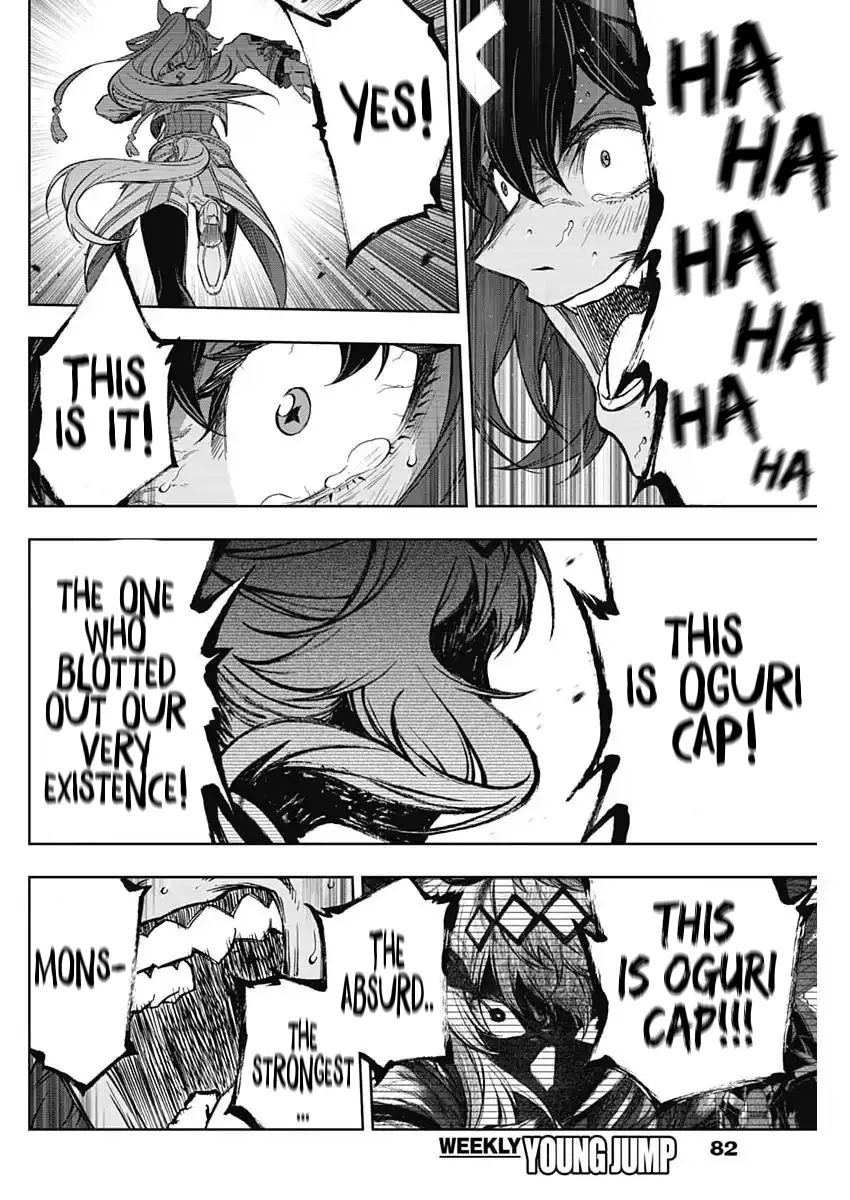 |
Of all the rivals that had run against Oguri Cap up to this point, Mill Wakaba is the last and for a good reason - she's been chasing the "Grey Monster." And it is in overtaking her, that Oguri Cap truly sheds the burden of the moniker. The following panel is one of the best panels in the manga, and I would feel remiss if I did not acknowledge the Twitter user who shared my love.
|
The monster that had haunted Mill Wakaba was never a monster at all. She was simply a girl named Oguri Cap, someone who loved to race.
By freeing herself of the "Gray Monster" moniker, Oguri Cap had also finally freed Mill Wakaba. In Chapter 209, we see Bright Rock and Mill Wakaba back on the roof, with Mill Wakaba thinking back on the Arima Kinen.
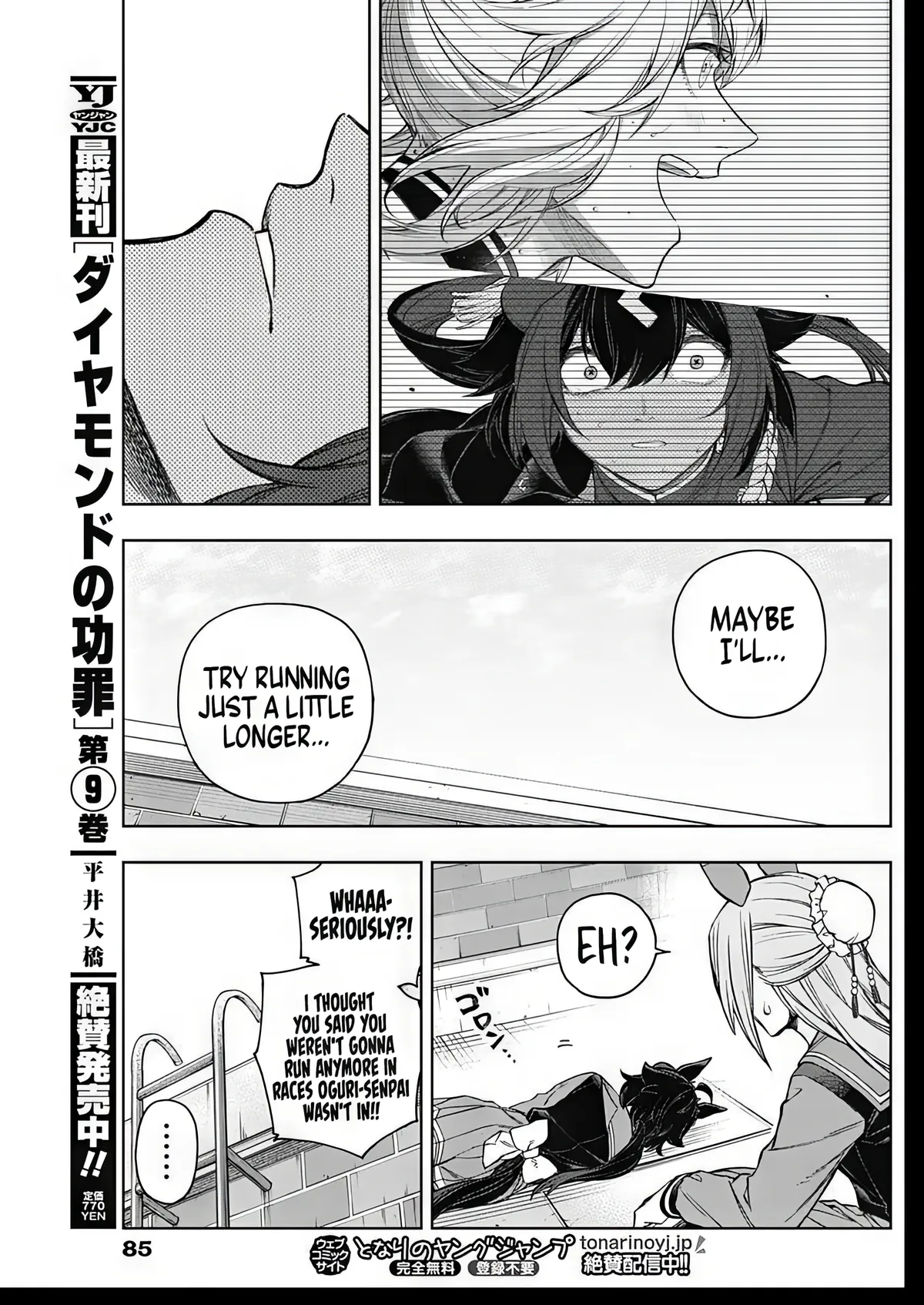 |
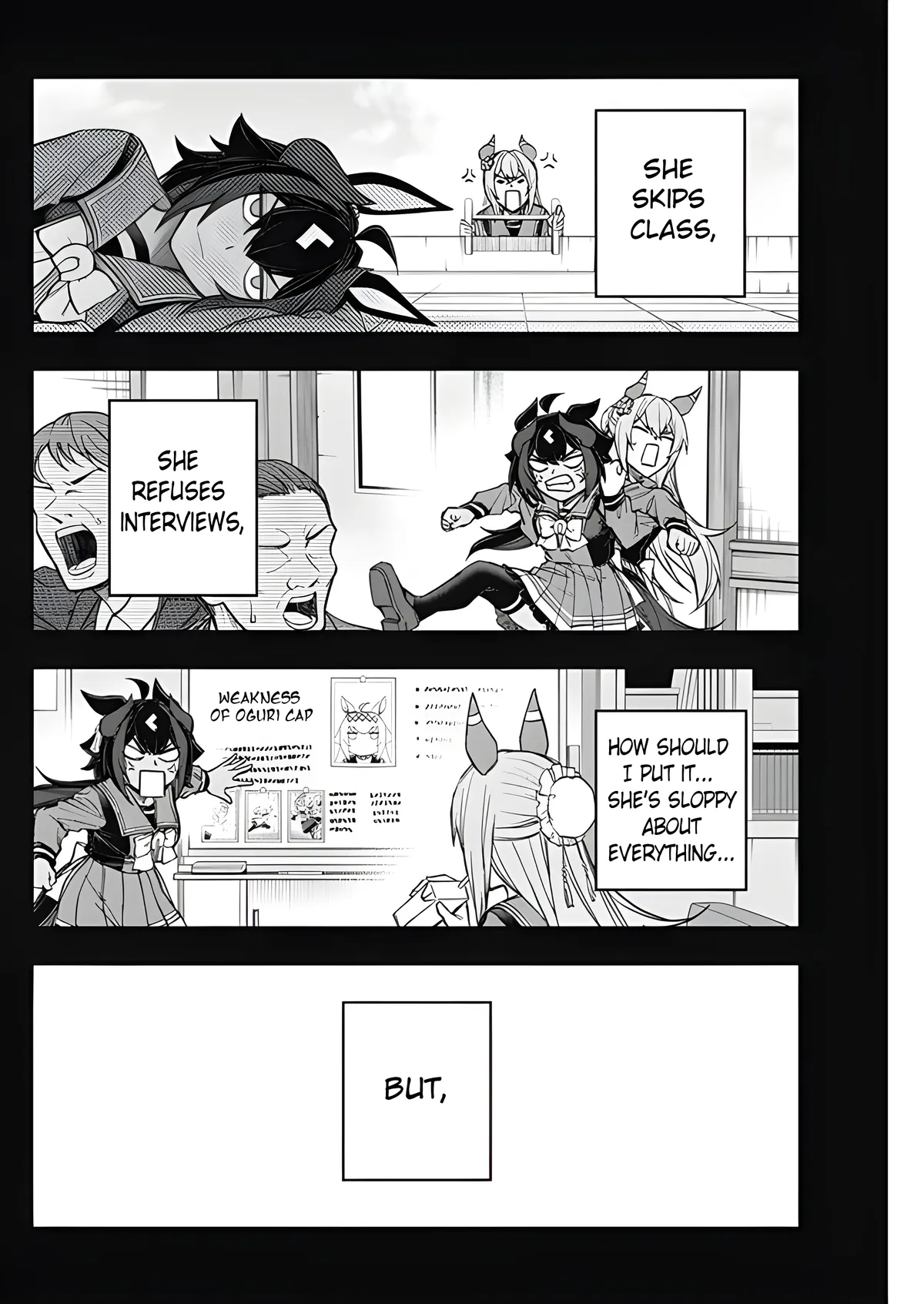
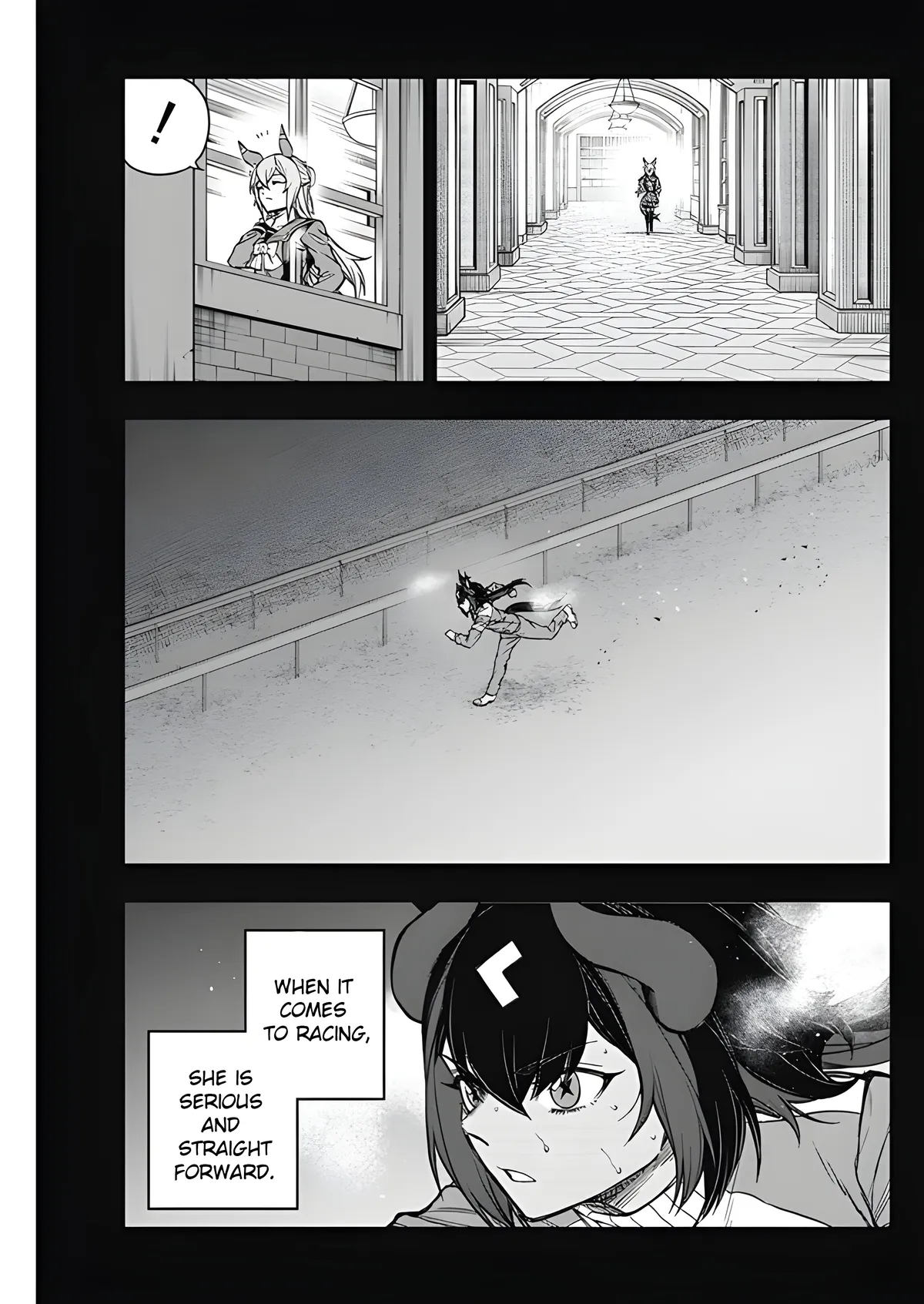
For her entire racing career, Oguri Cap had been a constant prescence. The desperation Mill Wakaba displayed - and Bright Rock noting that she had sworn off races that did not have Oguri - reflect how Mill Wakaba's very existence was not focused on her ambitions or dreams; there only was meaning if it was about Oguri Cap. Mill Wakaba has been depicted as rather temperamental and sloppy, someone honestly never seemed to never either be blowing up at reporters or lazing around with Bright Rock. However, racing was the one time she was serious. This is shown in Chapter 168.
 |
 |
However, Mill Wakaba's obsession with beating Oguri Cap is also what limited her potential. She saw nothing beyond beating her, of finally getting the catharsis of putting down the beast. It was no longer about just getting acknowledgement from others. Just like Oguri Cap, she had forgotten her love of racing - one that was beaten down by the world's obsession with Oguri Cap and turned into vicious anger. After all, her efforts had come to nothing but a crushing reply - if you want attention, you had to beat "Gray Monster." This expectation was why she needed Oguri Cap to be the monster so desperately - why she had felt so much anger. It was an unfair hand dealt out to both them.
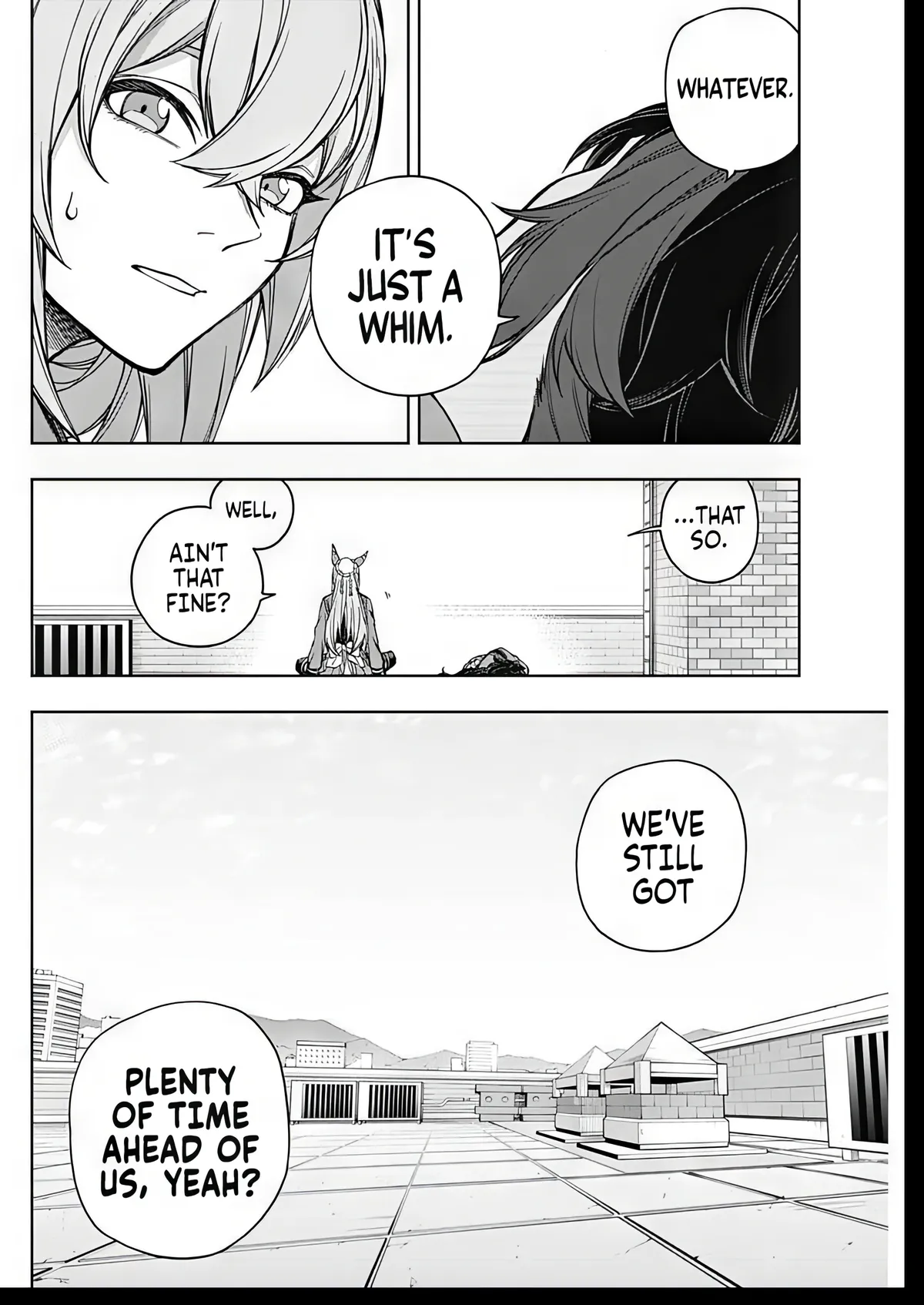
And so it is fitting that when Oguri Cap is finally able to re-center herself and find her love of racing again, Mill Wakaba is finally given reprieve to stop chasing a phantom. She no longer needs to run against Oguri Cap to prove herself. She can finally find her own path, wherever that might lead. As Bright Rock says in the last panel we see the two of them in - they have plenty of time ahead of them.
 |
Reflection
The story of Mill Wakaba is an important portrayal of the dark side of Oguri's dominance. The tribulations that Mill Wakaba went through are another indictment of the world's obsession with Oguri Cap, something that not only broke the "in-betweeners" but also Oguri herself. She also serves as an important contrast to the rest of the rivals.
While all of the other main rivals are depicted with their trainers present, Mill Wakaba is the only one that is seemingly left to her own devices. There was no other source of validation outside of Bright Rock, no fans or reporters or other racers. Her only source of ego was from Oguri Cap. It's why we never see that same spunkiness from her intro ever again - there was ever only anger. I can't necessarily say her hatred for Oguri Cap was misplaced, although it was neither the fault of Oguri Cap or Mill Wakaba. The shadow of unprecedented long-lasting generational talent twists and distorts the world around them, whether they mean to or not.
She could not separate the racer from the concept like Yaeno Muteki, nor could she be happy just putting up a fight like Bamboo Mempry. She was never acknowledged as a legend like Super Creek or Inari One, nor chould she match the partnership between Ardan and Chiyono O. Mill Wakaba, from the very start, had always been on the backfoot. Yet, I think that's what makes her such a beautiful character.
She came up despite all that, despite the world trying to kick her to the side. Mill Wakaba was the cry for someone to take responsibility, to acknowledge the unfair treacherous path that was laid out for the generation that followed. She was the voice of a generation that might have been cast into darkness but would not be swept away without a fight. She is the vicious anger against a world that was so obsessed with stars that it could not see the ground.
Out of all the rivals, I felt the most affinity with Mill Wakaba. The feeling of constantly living in someone else's shadow is an all too common experience. It is a painful one, nearly suffocating: how deteriorating every day can be when you are constantly haunted by the phantom of someone else, how it distorts your view and how it undermines your very being even if the person in question never intended for any of this. As someone struggling with this, I don't have an nice pithy answer.
However, we cannot keep chasing after ghosts or ideas. Mill Wakaba may not have ever proven her superiority over the "Gray Monster", but it was no longer her guiding light. Finding that freedom may be a struggle, a long one perhaps. But every step we take is still a victory. Each day is another proof we're here. And so we etch our existence, slowly but surely, on a path that is uniquely our own.